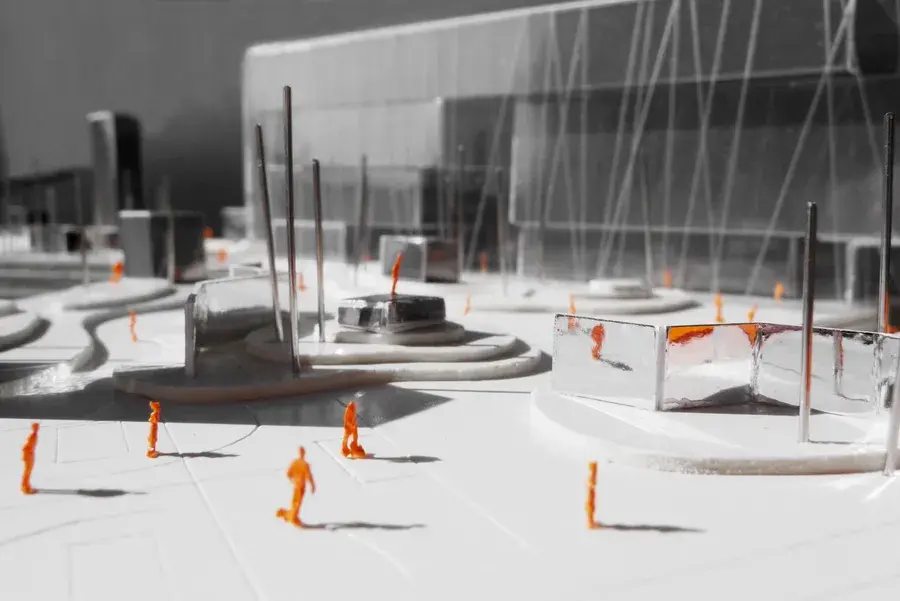
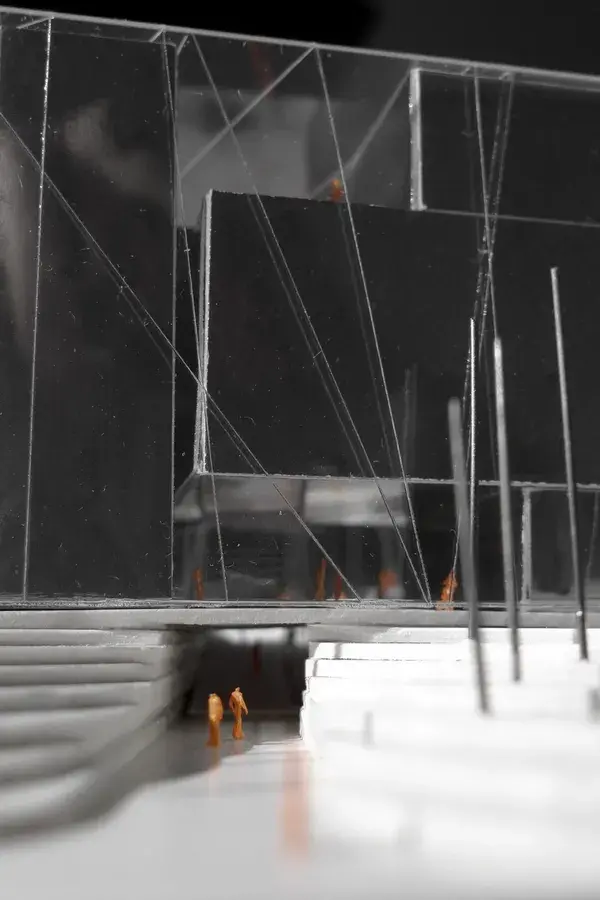
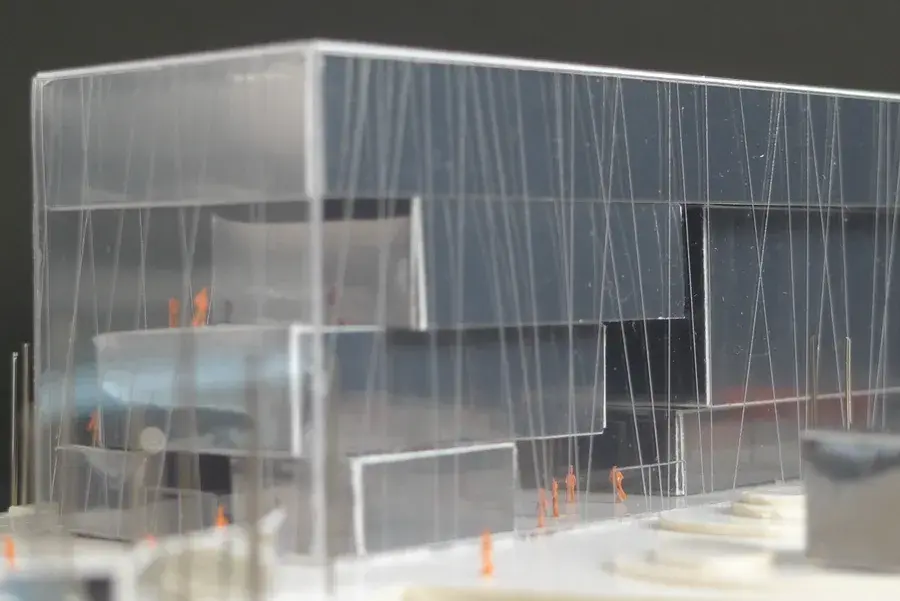
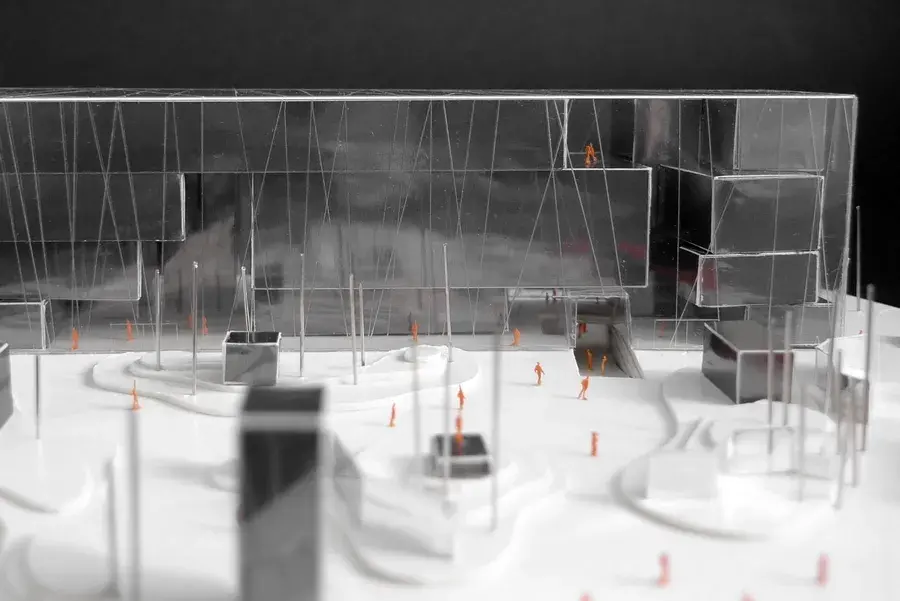
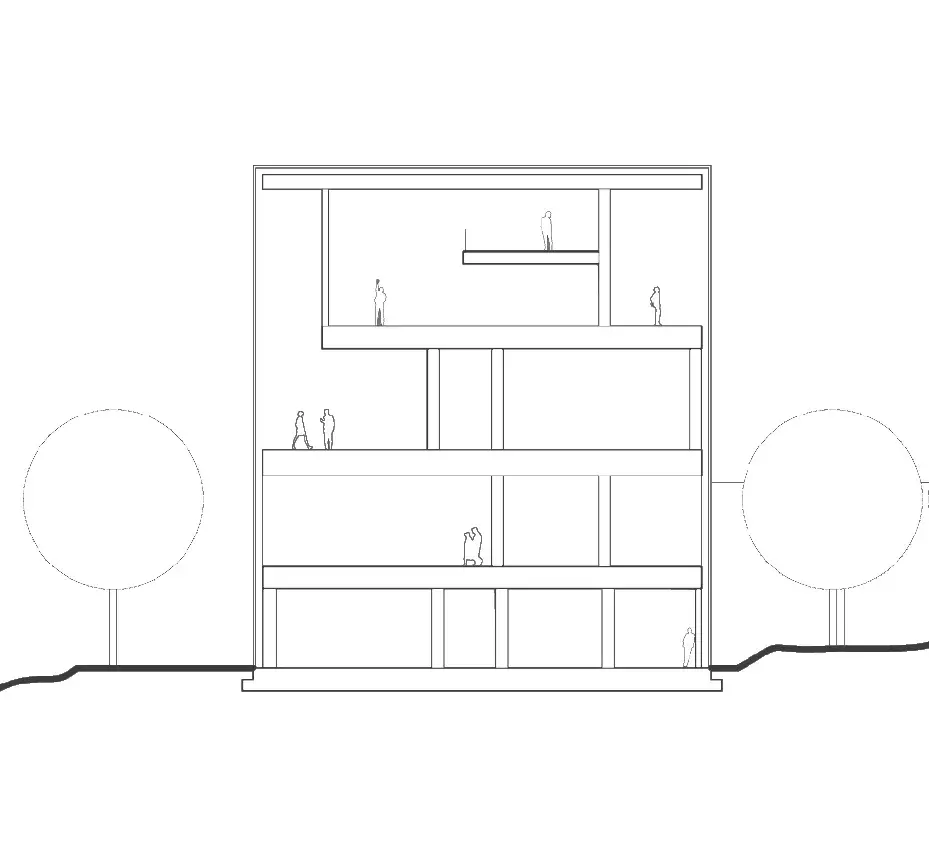
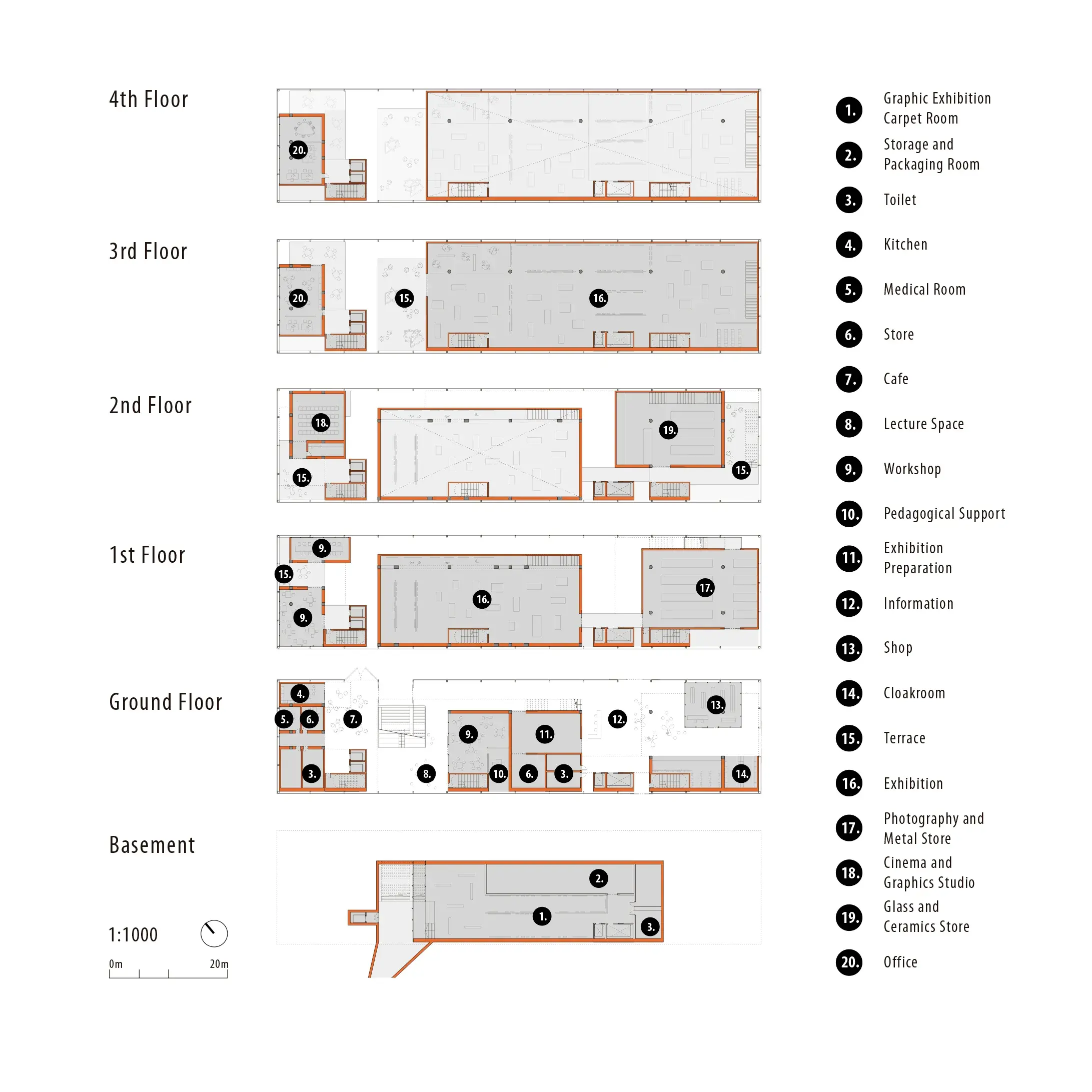
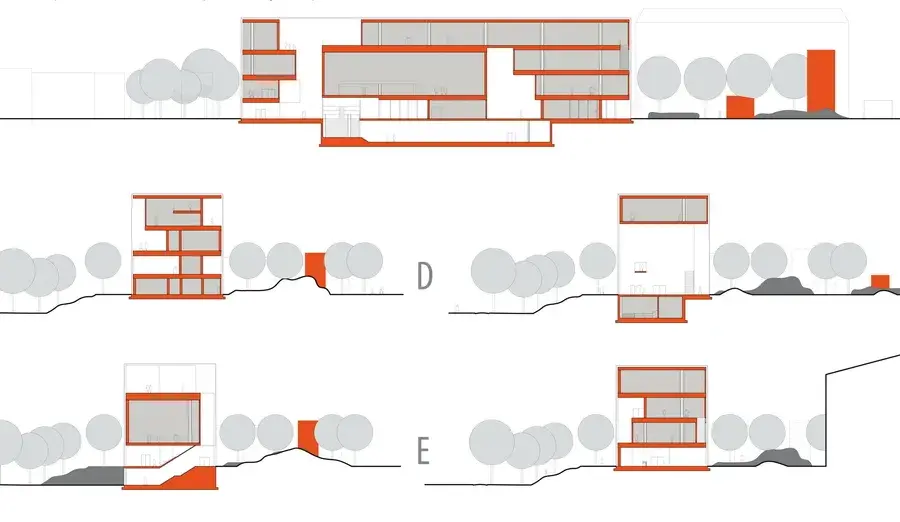
The solid spaces are used to accommodate the program elements that require protection from intense natural light, mainly the exhibition and storage areas. In contrast, the voids are dedicated to more public access spaces, such as the entrance lobby and the cafeteria.
The exhibition areas also have additional space within the voids, allowing greater flexibility for temporary exhibitions. The resulting program distribution offers a high degree of adaptability and encourages public interaction with the museum.
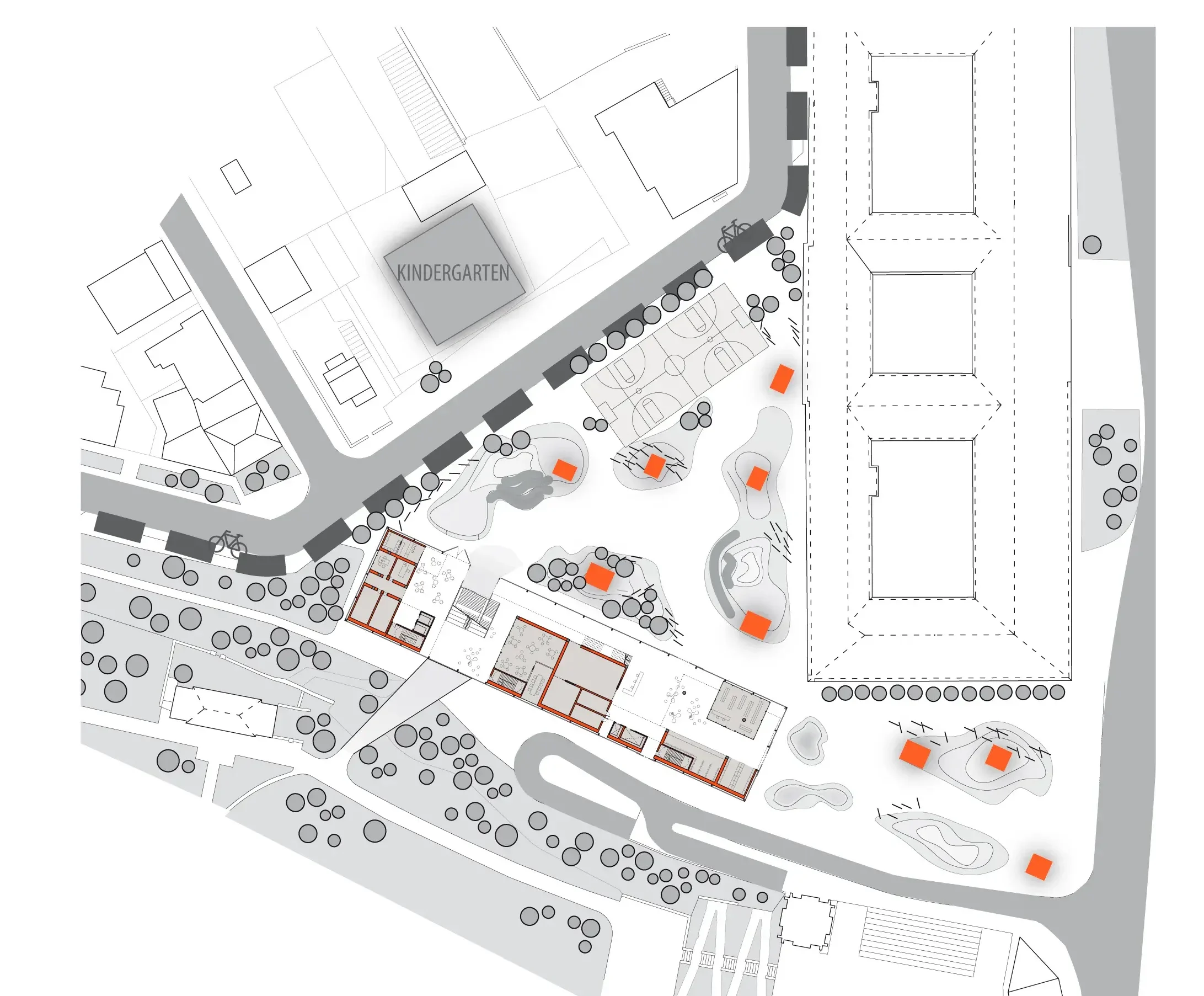
The location of public spaces (entrance, shop, cafeteria, etc.), semi-public spaces (galleries, workshops, etc.), and private spaces (offices, storage, etc.) has been integrated into the organization of the program in order to encourage relationships and connections between them.