Museo Intermediae I

Madrid

Museo Intermediae I

Madrid

Museo Intermediae I

Madrid

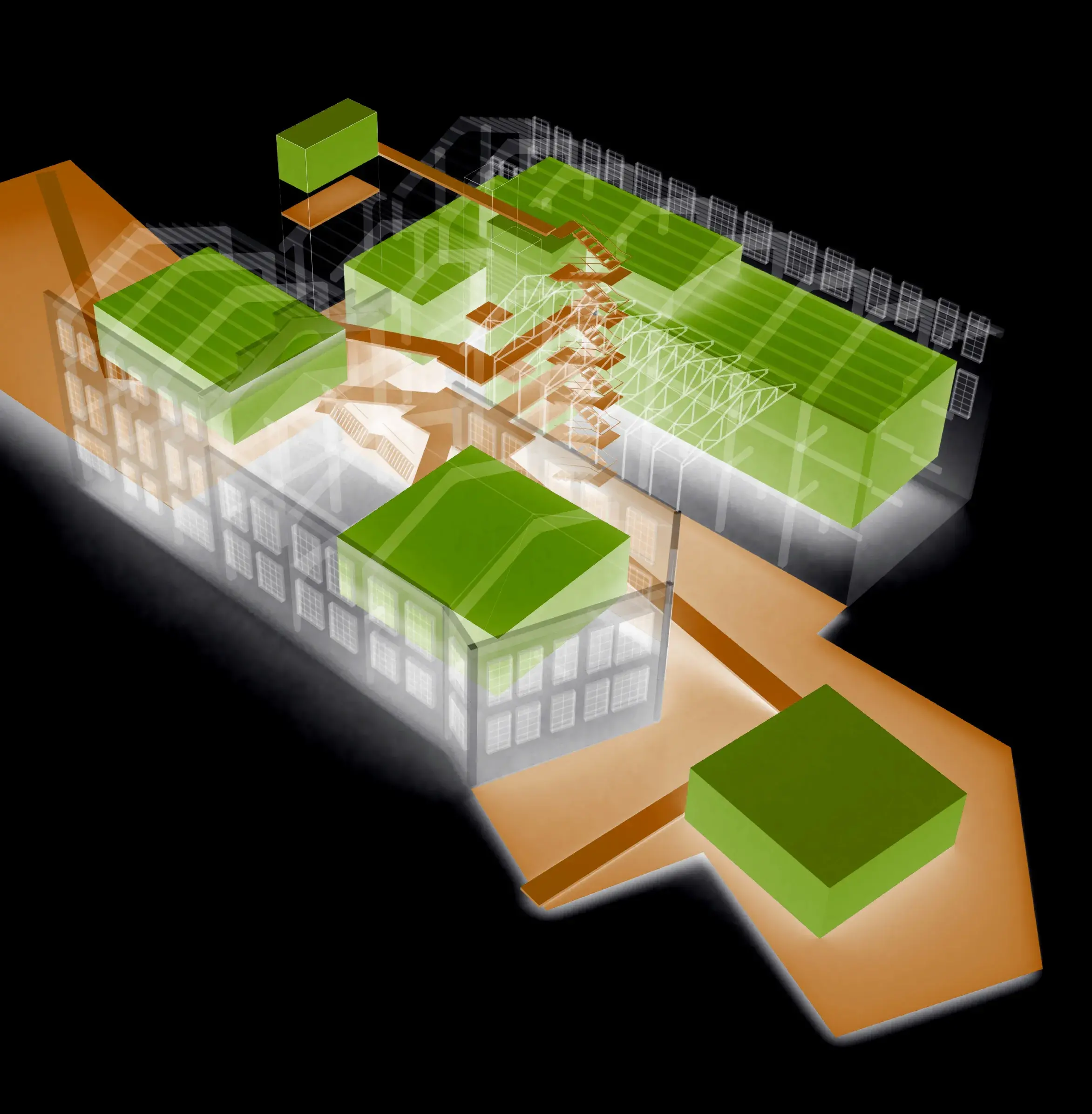
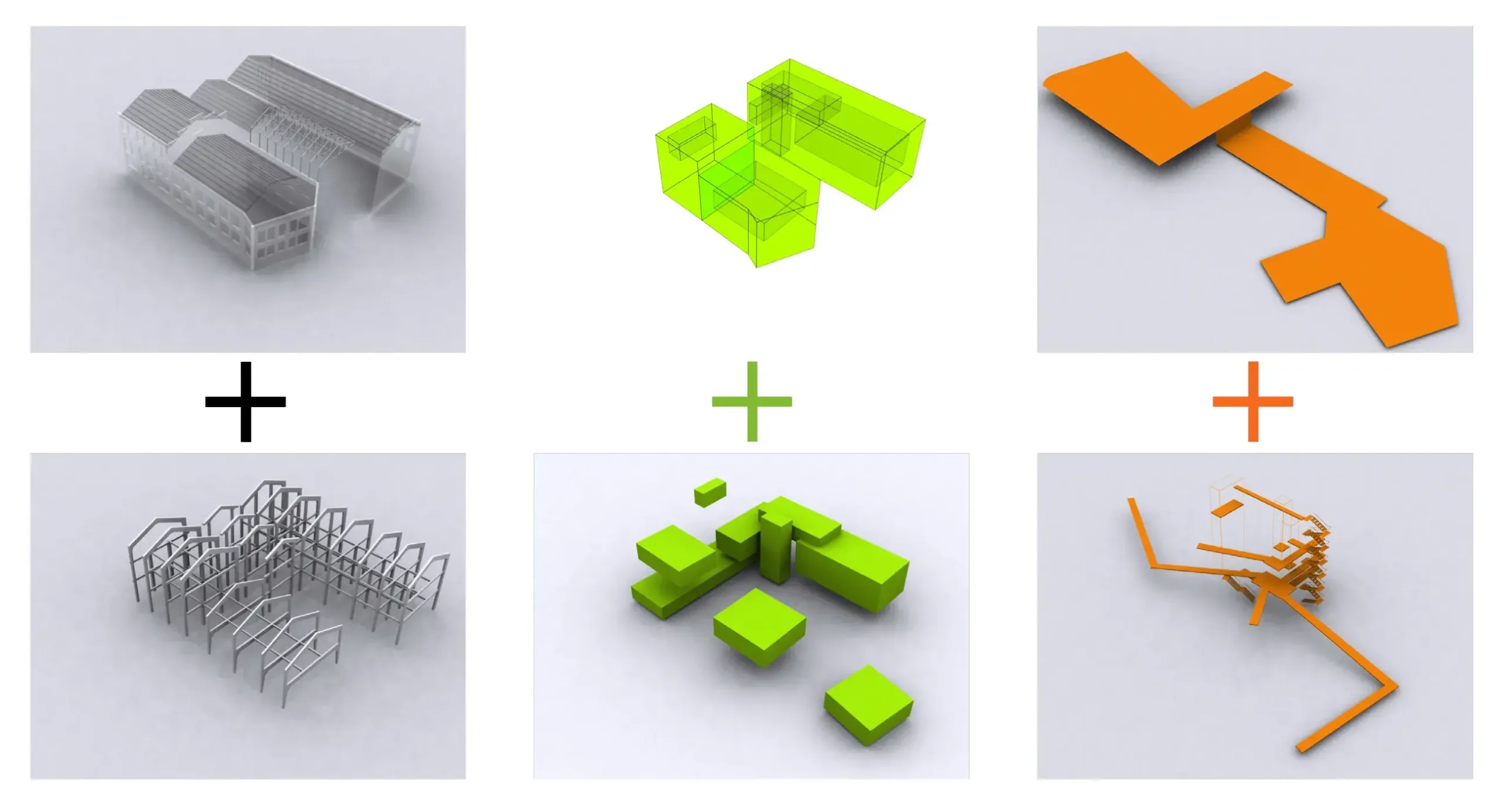
The existing building is respected and emphasized as a key element for generating multiple scenarios. We hollow out the building, keeping the envelope and structure as support for the program. The principle of conservation is applied rather than reconstruction: we embrace the building’s powerful image of decay and transform this frozen ruin into a generator of new spaces.

Museo Intermediae I

Madrid

The existing building is respected and emphasized as a key element for generating multiple scenarios. We hollow out the building, keeping the envelope and structure as support for the program. The principle of conservation is applied rather than reconstruction: we embrace the building’s powerful image of decay and transform this frozen ruin into a generator of new spaces.

The intervention must consider the heritage value of this complex, with its undeniable historical and artistic significance, taking into account its special urban planning classification. The building must be respected, emphasizing the characteristics of this early 20th-century industrial construction, but offering a reinterpretation of these values ​​that transcends the traditional "taxidermic" approach that often characterizes such interventions—"look but don't touch"—an excessive respect that conditions and limits comprehensive interventions that would allow for new possibilities to be explored so that the "old" becomes new, not through an external facelift, but through a "regeneration" of its vital elements.

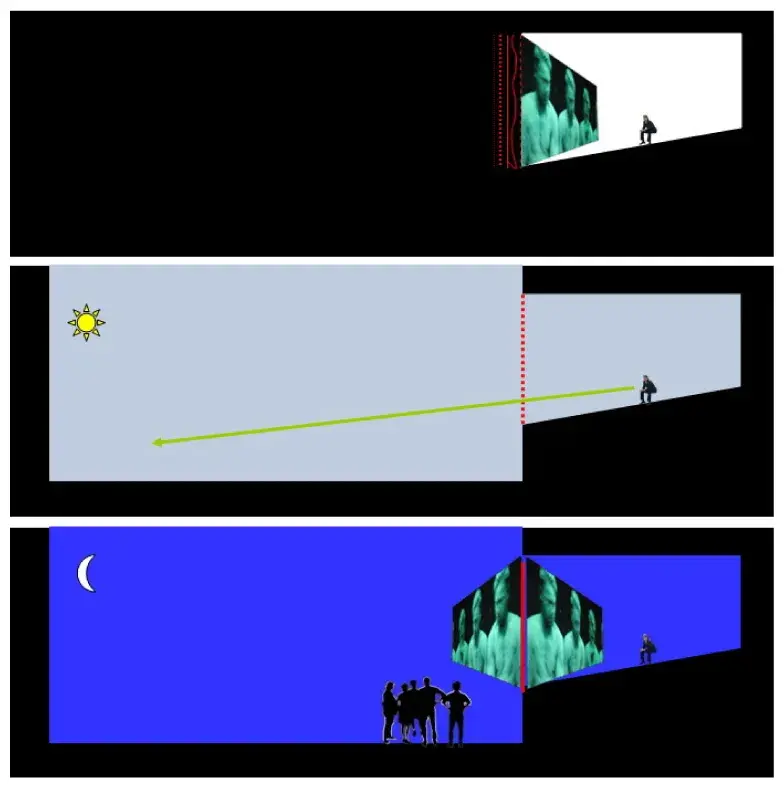
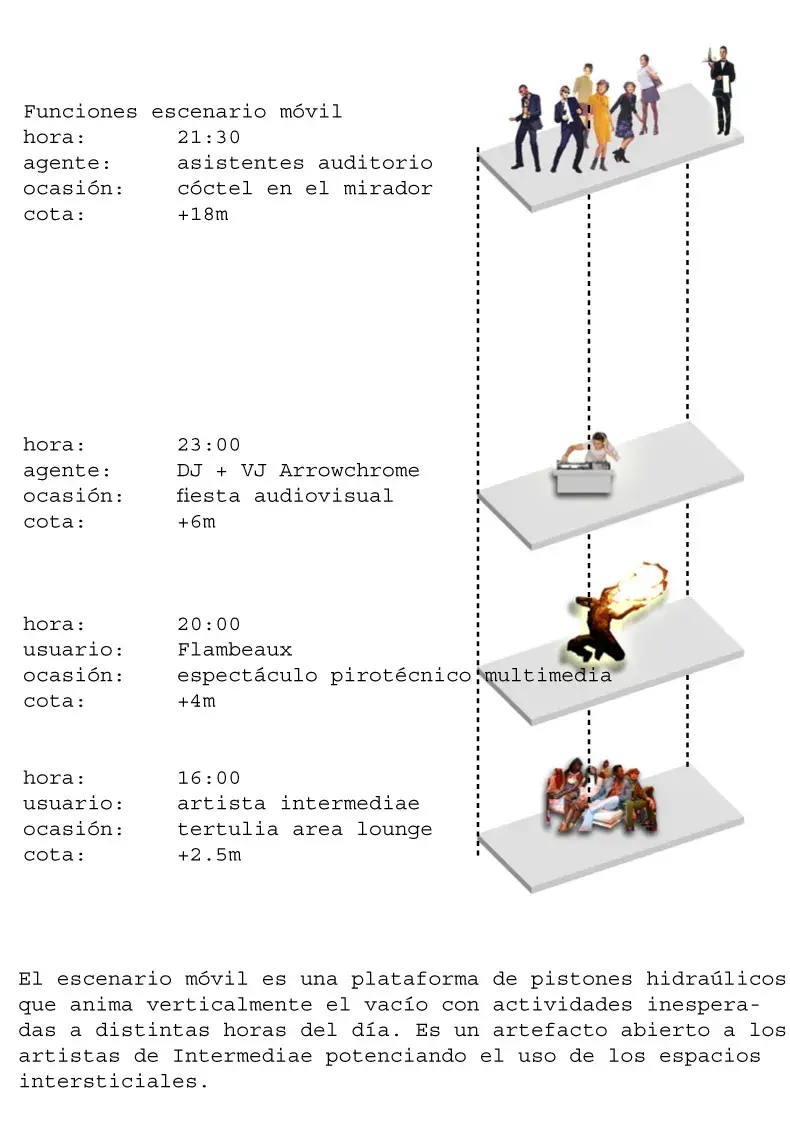
The exhibition spaces for Intermediæ Prado must be flexible and adaptable, capable of reflecting the ideas of Intermediæ Matadero as well as those of the public. Therefore, we seek undefined, dynamic, unfinished, interstitial, limitless… unpredictable spaces. Only those elements with permanent use, or those logically related to services (storage, restrooms, management, installations, vertical circulation), will be designed as specific spaces with predetermined functions.

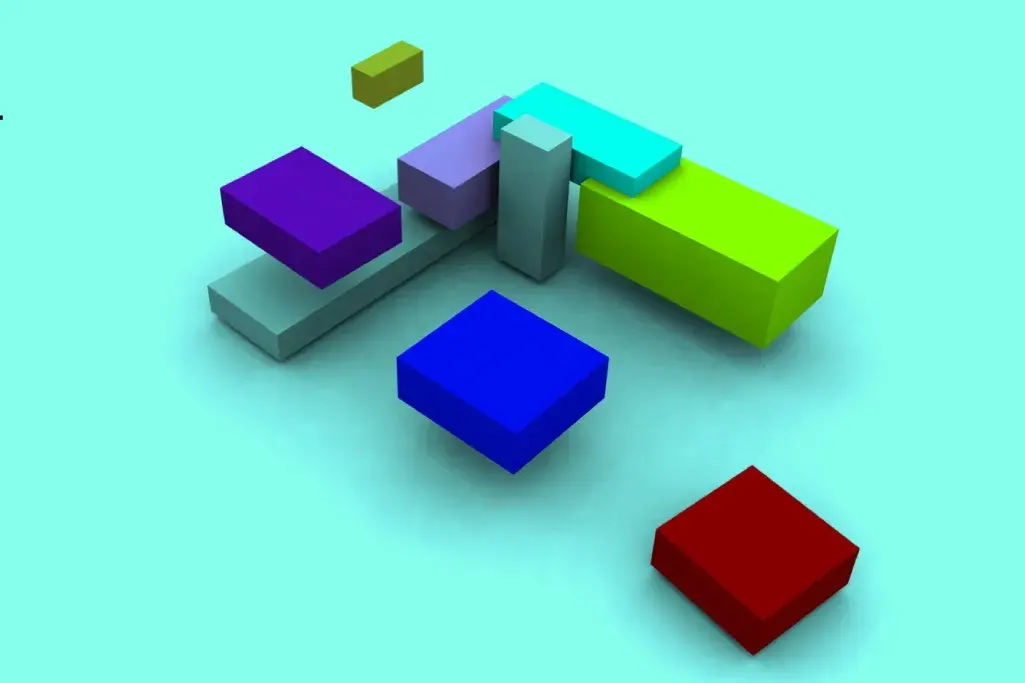
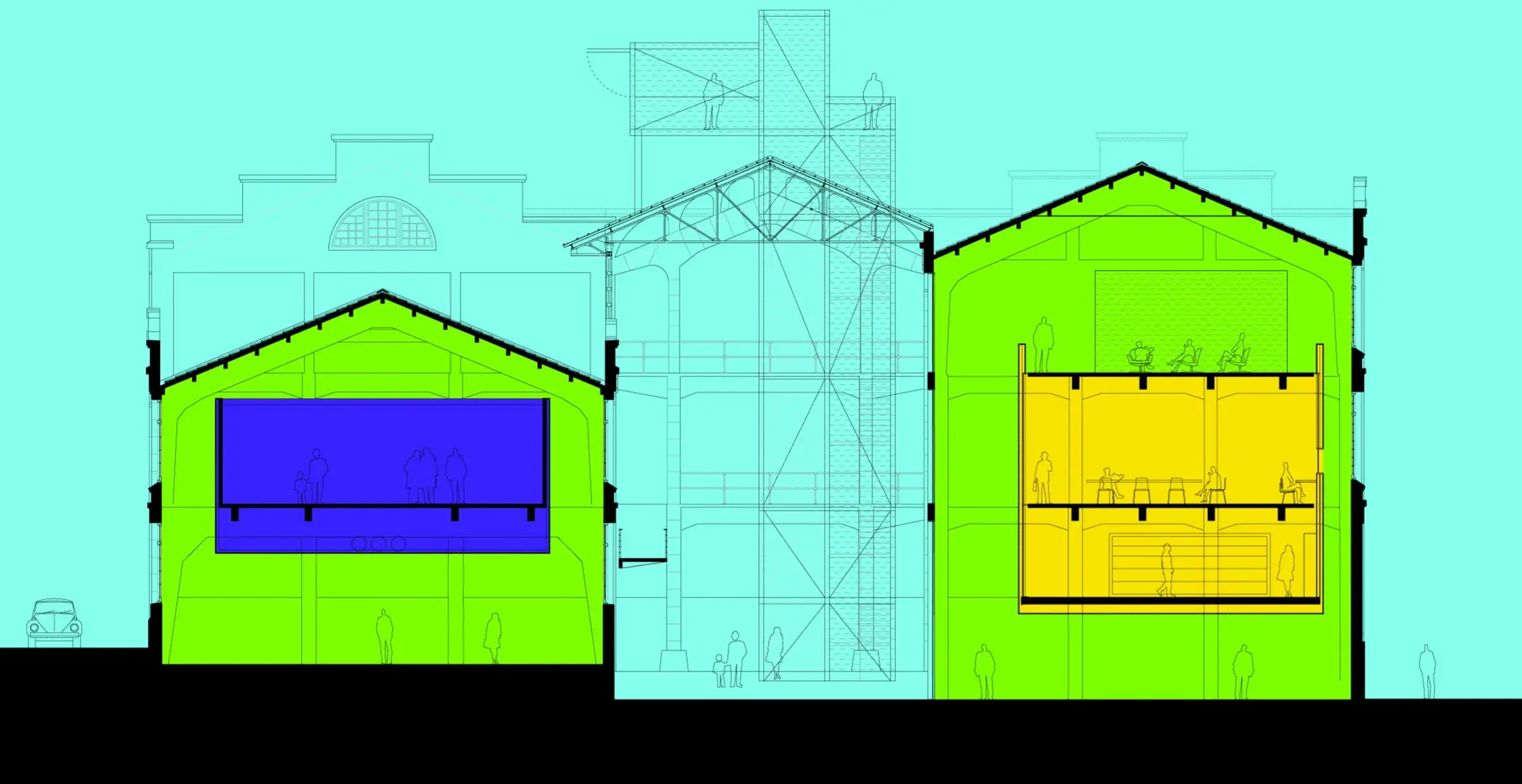
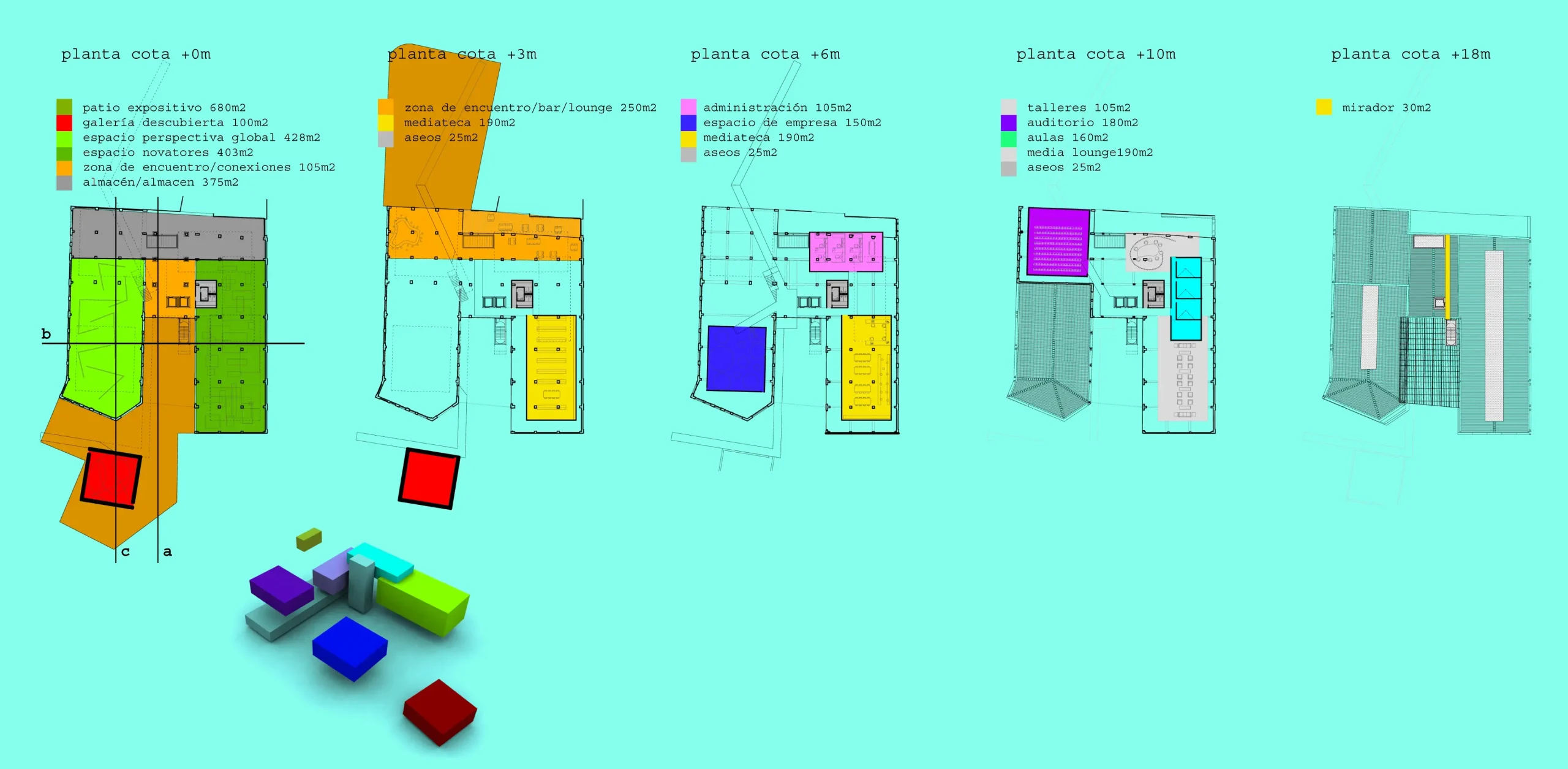
Program: We divide the program between undefined uses (Global and Novatores exhibitions) and defined uses (media library, audiovisual room, administration, classrooms, business space, and service areas). The defined spaces are suspended from the existing structure inside the building, always independent of the envelope. Meanwhile, the Global and Novatores exhibitions occupy the ground floor of the two main halls and extend vertically, reclaiming the interstitial spaces generated between the defined spaces.

Museo Intermediae I

Madrid

Museo Intermediae I

Madrid
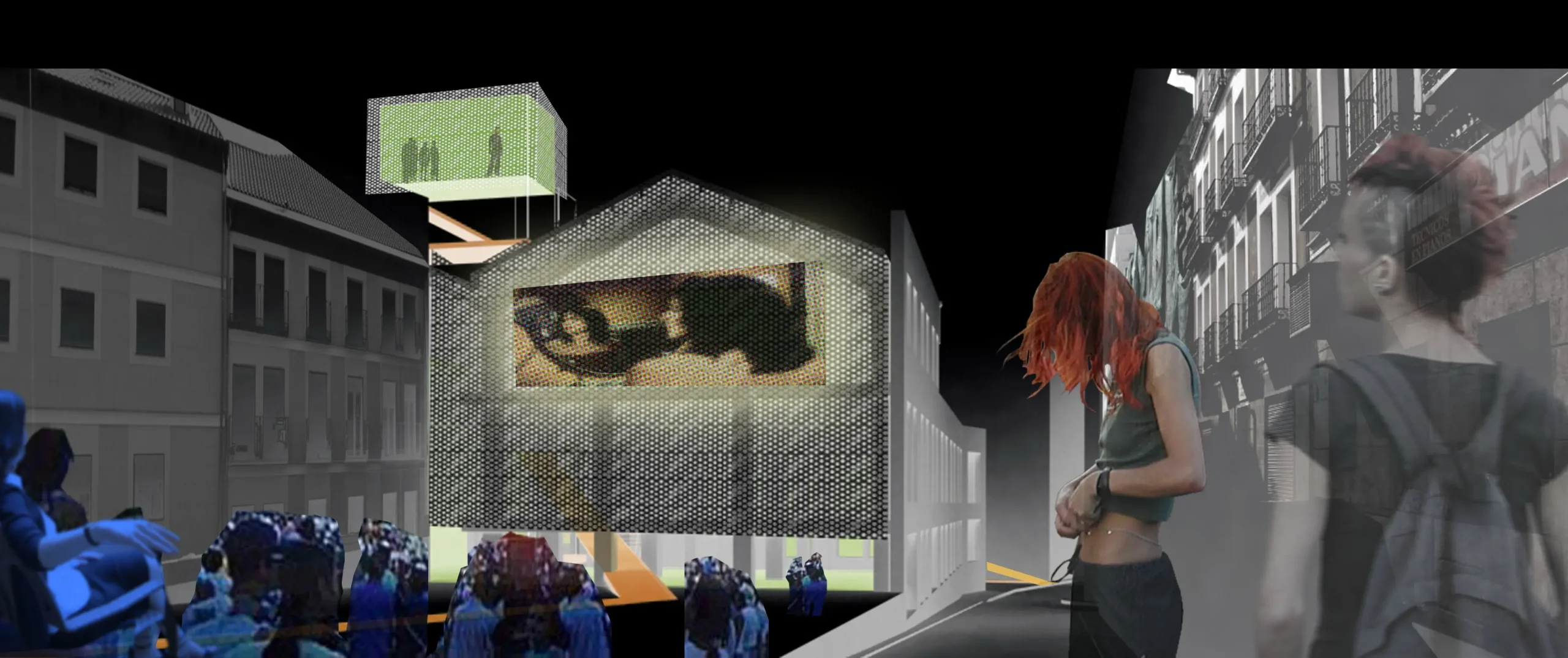
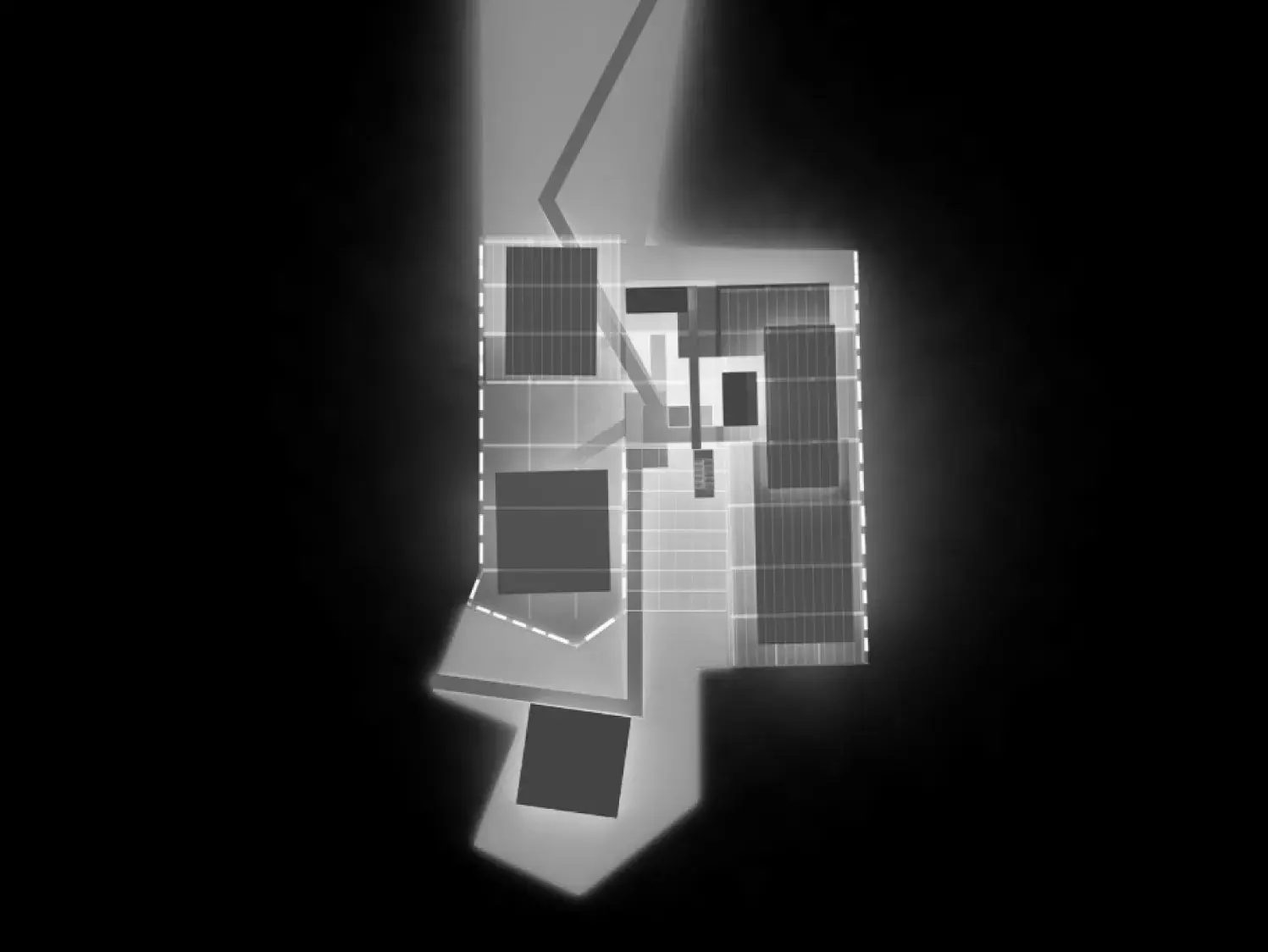
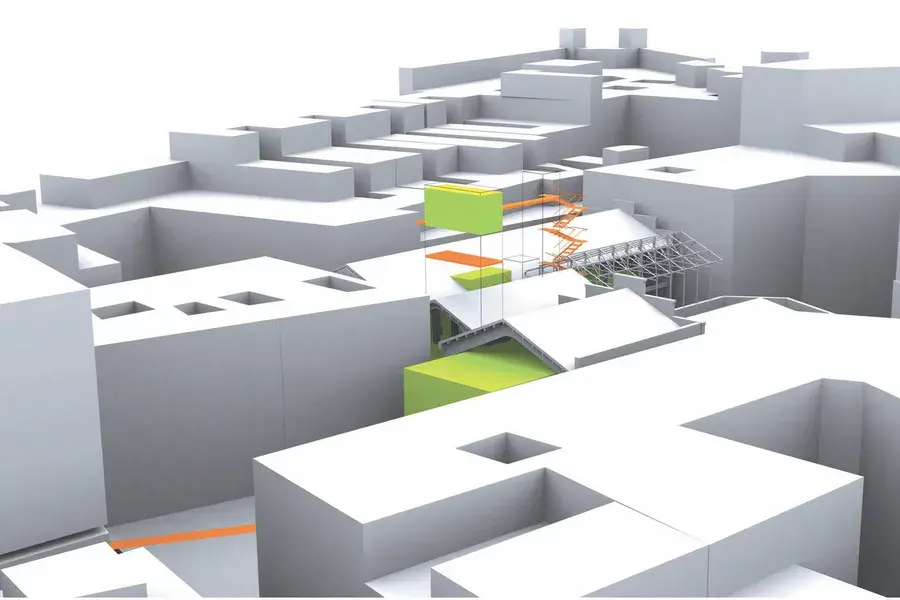
Urban connections: The meeting place is located between the main halls and functions as a platform from which to explore the program, observe the building, interact with the city, and provide a unique identity to the whole through its topography and walkways.

Topography: The building invites pedestrian interaction through a sequence of multiple meeting spaces that traverse the building and the ground floor exhibitions—the plaza on Almadén Street, the event space, the exterior courtyard between buildings, and the covered area between the halls and the garden on Alameda Street.

Walkways: In addition to spanning the urban sequence like bridges, these inventive and ever-changing walkways abruptly spill out onto the street, intending to directly engage pedestrians with the nerve center of Intermediæ Prado.

Museo Intermediae I

Madrid

Museo Intermediae I

Madrid