Museo Intermediae II

Madrid

Museo Intermediae II

Madrid

Museo Intermediae II

Madrid

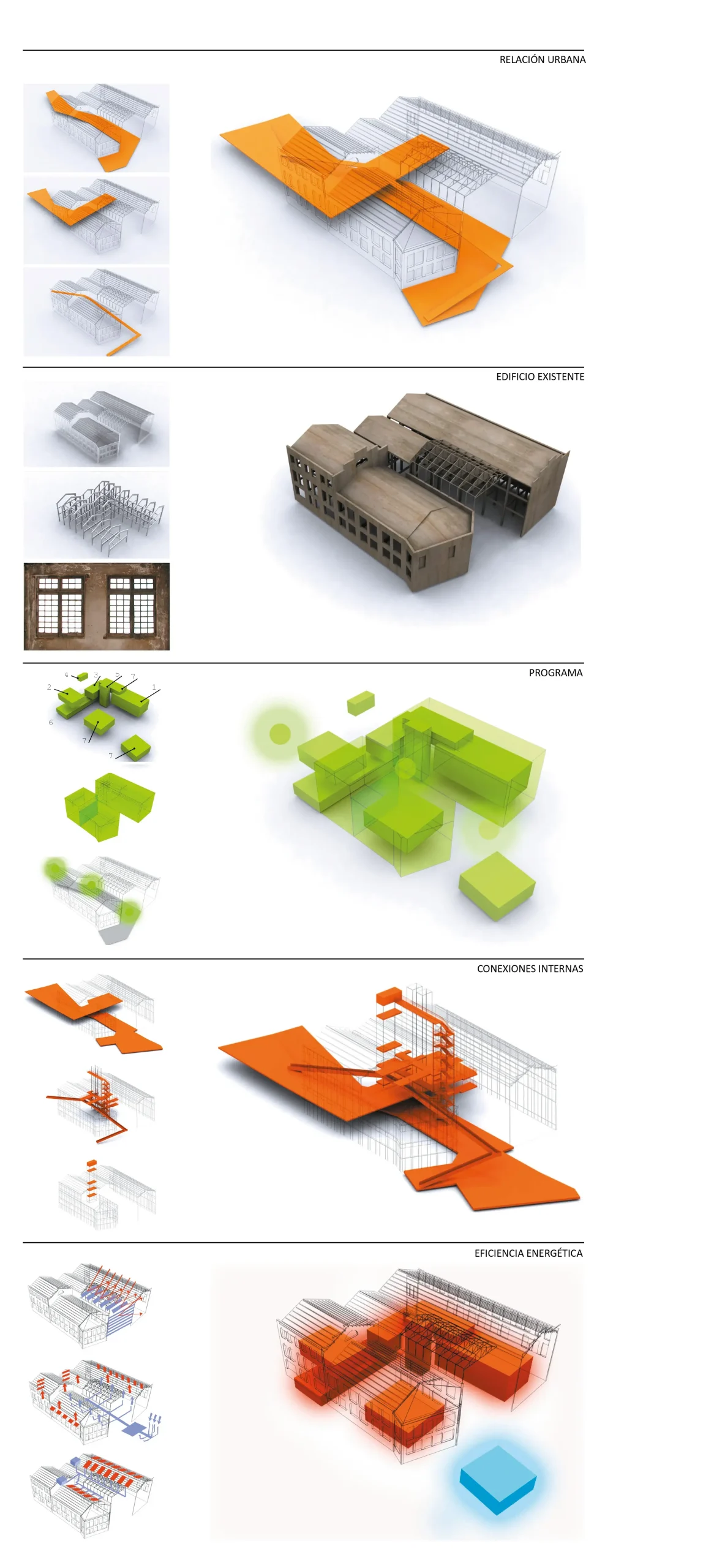
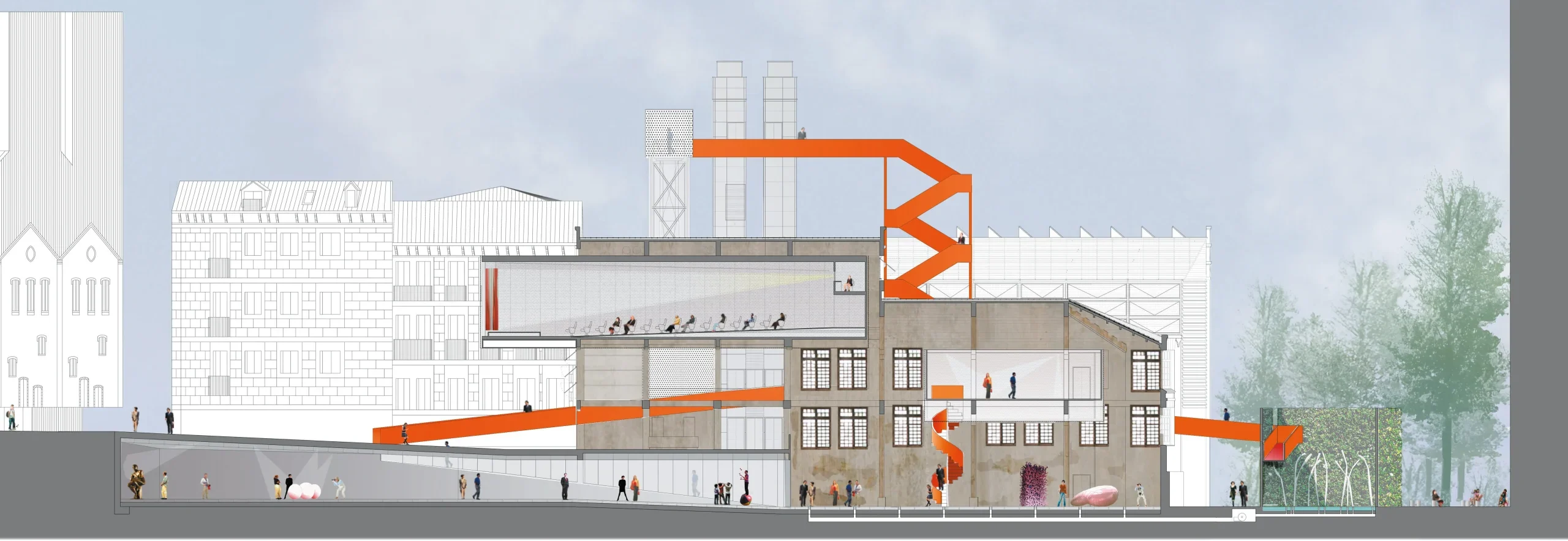
The rehabilitation of the Serrería Belga (Belgian Sawmill) must serve not only to restore a historic building, but also, through its renewed presence and the parallel work on the Plaza de la Alameda, to create a true link that gives meaning to the CaixaForum-Reina Sofía axis and catalyzes the flow between both institutions, achieving an integrating effect within Madrid’s museum and cultural network. It is essential to find solutions that facilitate the flow of people between these three institutions, while simultaneously establishing new landmarks that give the building the prominence it deserves.

Museo Intermediae II

Madrid

The rehabilitation of the Serrería Belga (Belgian Sawmill) must serve not only to restore a historic building, but also, through its renewed presence and the parallel work on the Plaza de la Alameda, to create a true link that gives meaning to the CaixaForum-Reina Sofía axis and catalyzes the flow between both institutions, achieving an integrating effect within Madrid’s museum and cultural network. It is essential to find solutions that facilitate the flow of people between these three institutions, while simultaneously establishing new landmarks that give the building the prominence it deserves.

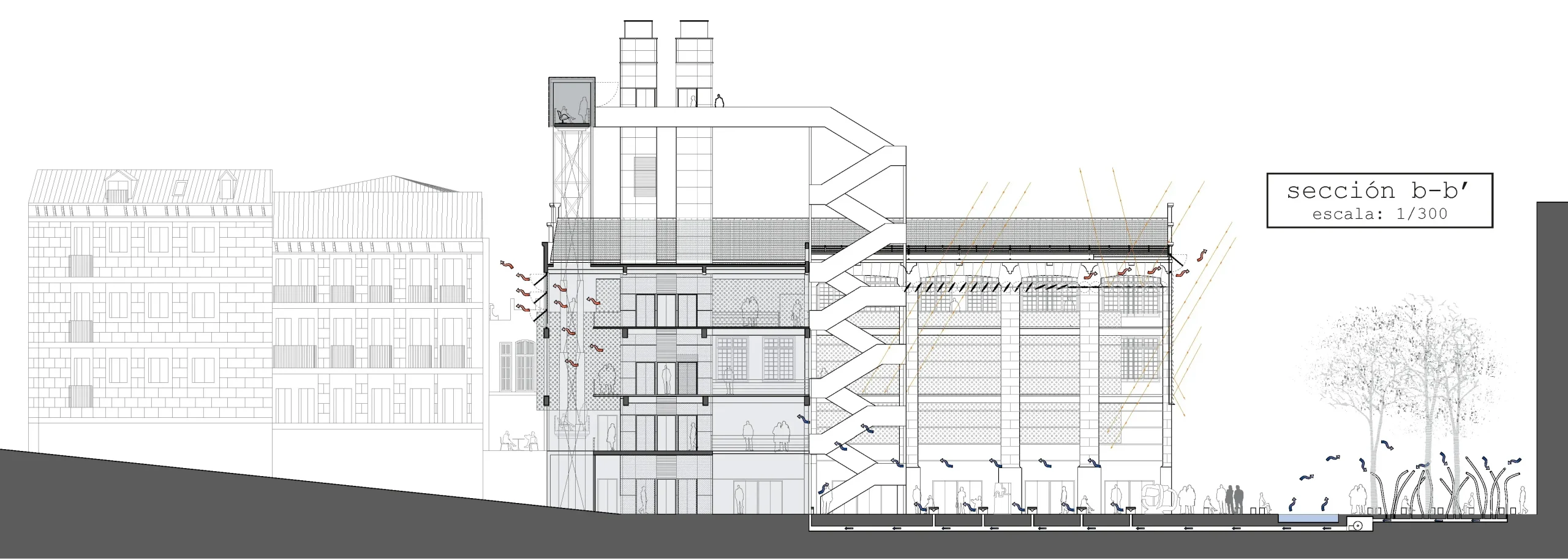
The intervention must consider the heritage value of this complex, with its undeniable historical and artistic significance, taking into account its special urban planning classification. The building must be respected, emphasizing the characteristics of this early 20th-century industrial construction, but offering a reinterpretation of these values ​​that transcends the traditional "taxidermic" approach that often characterizes such interventions—"look but don't touch"—an excessive respect that conditions and limits comprehensive interventions that would allow for new possibilities to be explored so that the "old" becomes new, not through an external facelift, but through a "regeneration" of its vital elements.

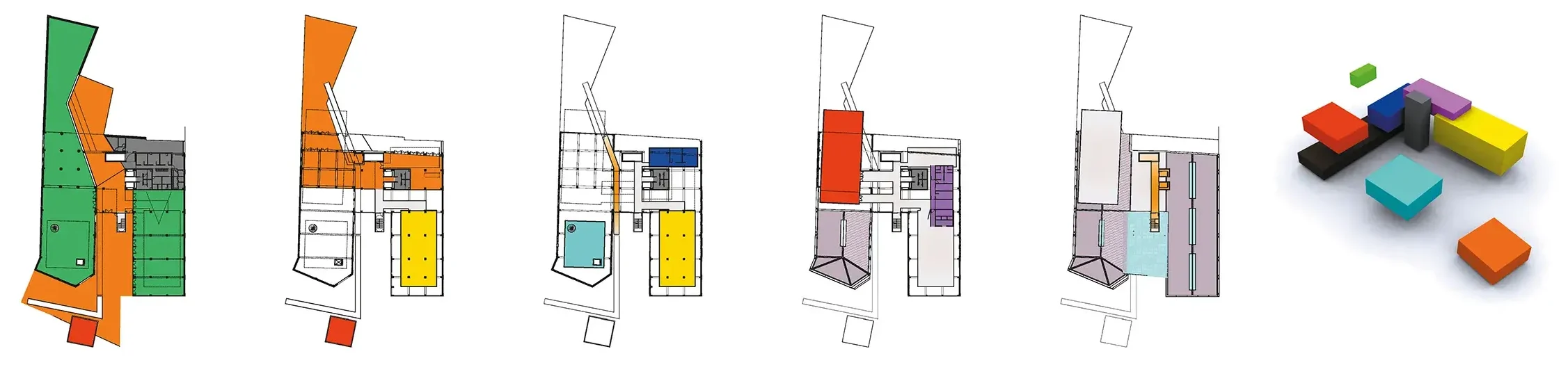
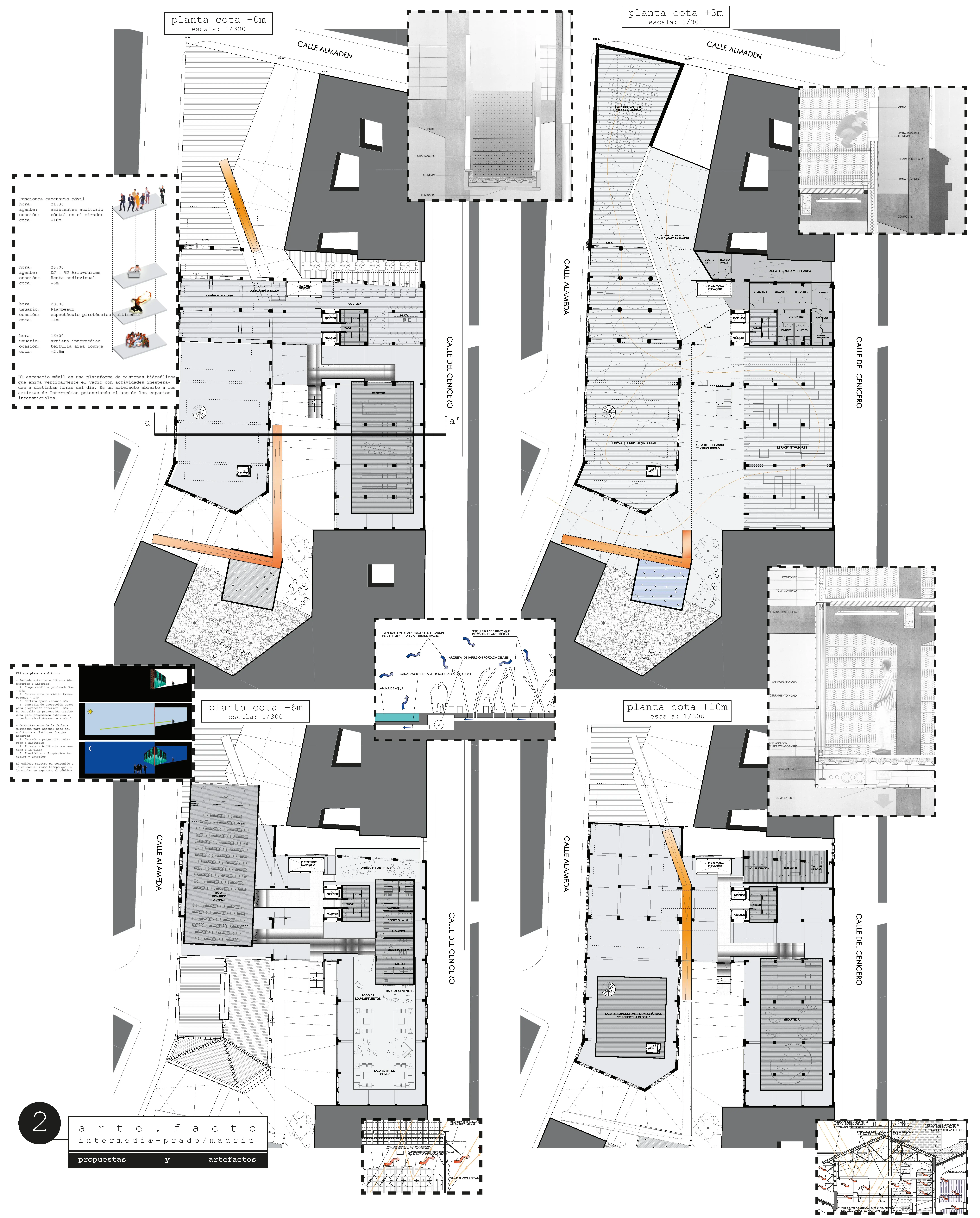
The exhibition spaces for Intermediæ Prado must be flexible and adaptable, capable of reflecting the ideas of Intermediæ Matadero as well as those of the public. Therefore, we seek undefined, dynamic, unfinished, interstitial, limitless… unpredictable spaces. Only those elements with permanent use, or those logically related to services (storage, restrooms, management, installations, vertical circulation), will be designed as specific spaces with predetermined functions.

Museo Intermediae II

Madrid

Museo Intermediae II

Madrid
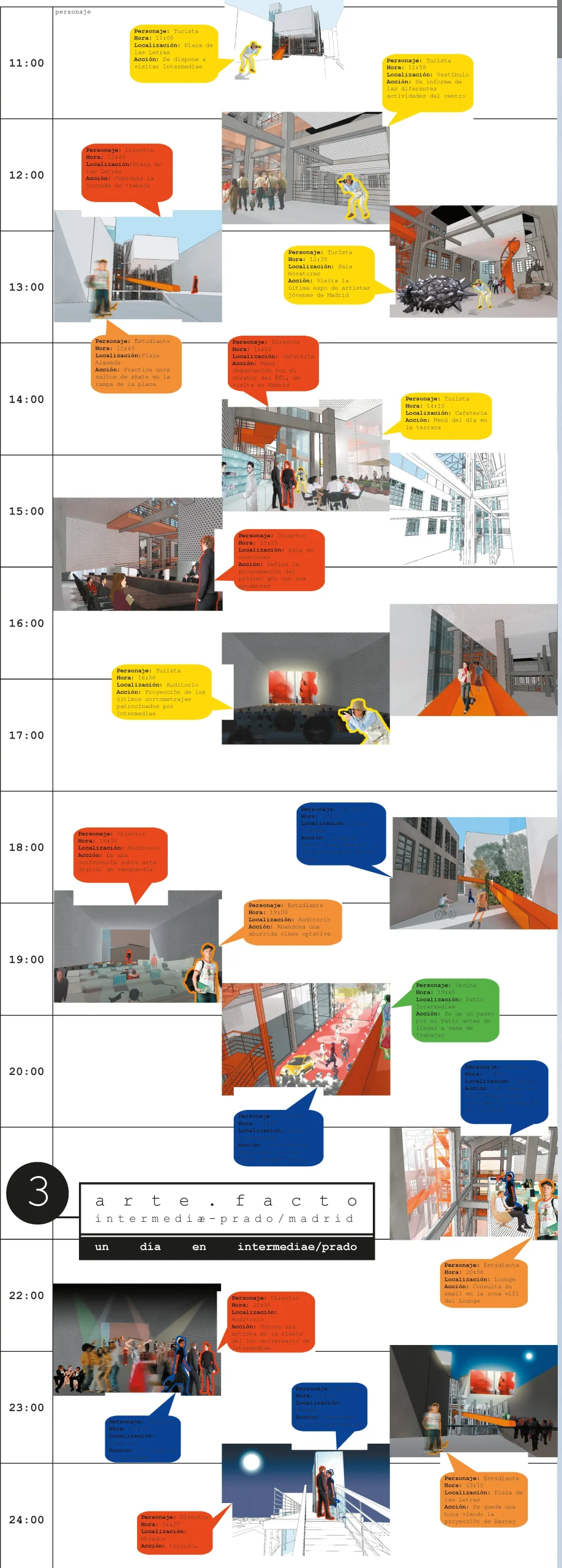
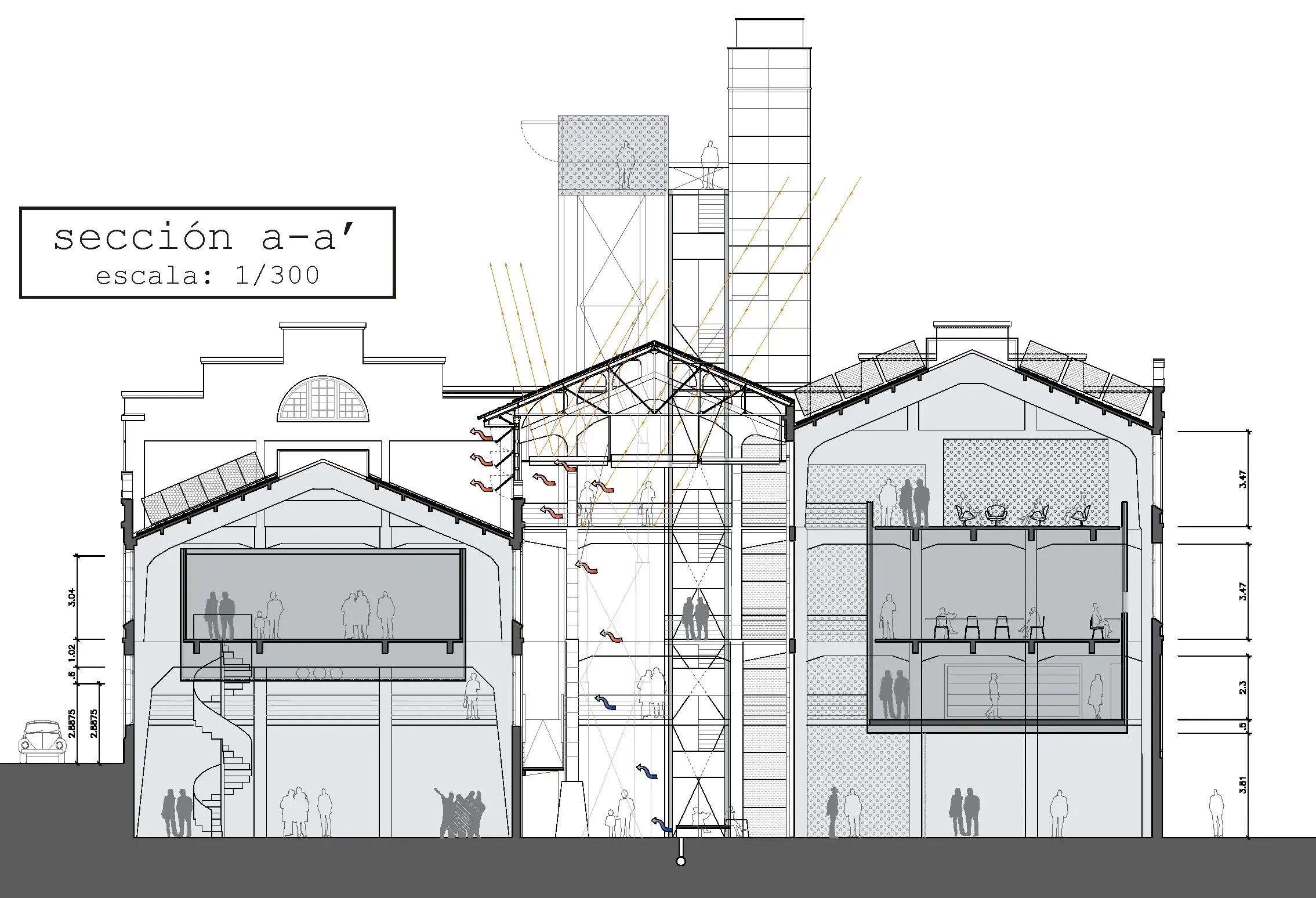
A primary objective should be the permeability of the interior space, visually interrelating the different uses, thereby enhancing the visitor's orientation within the complex, both in relation to themselves and to the exterior. This fosters a strategy of vertical communication axes that can have an external presence as landmarks or viewpoints. This network of connections would serve as a platform from which to observe the existing building as well as the new, undefined spaces traversing the building through its public areas.

Museo Intermediae II

Madrid

Museo Intermediae II

Madrid