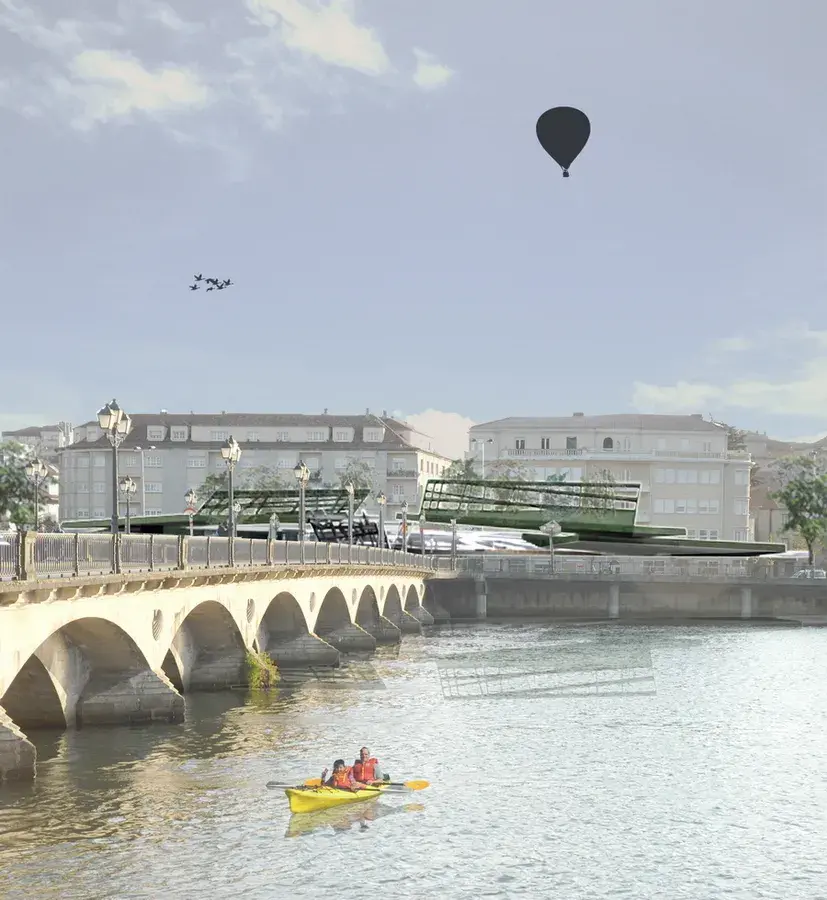
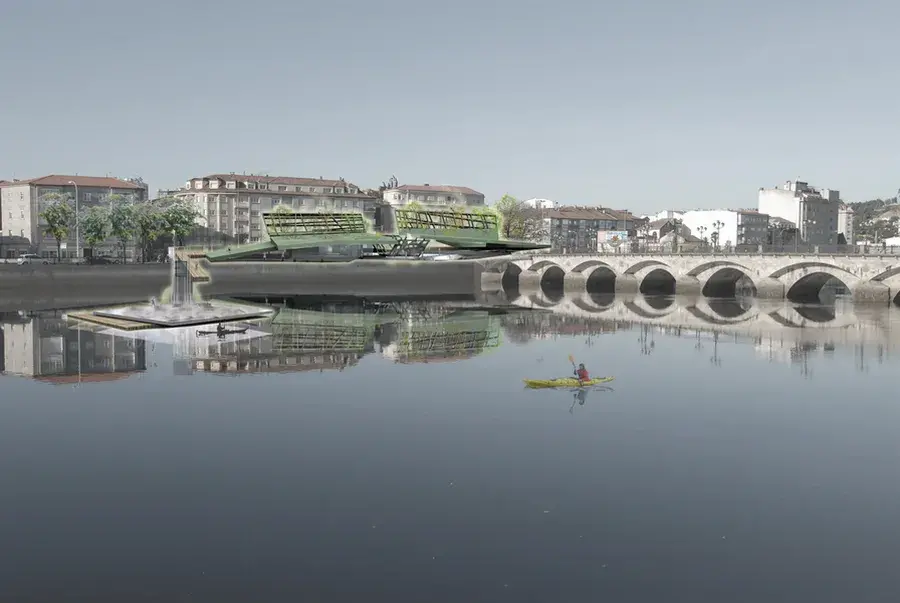
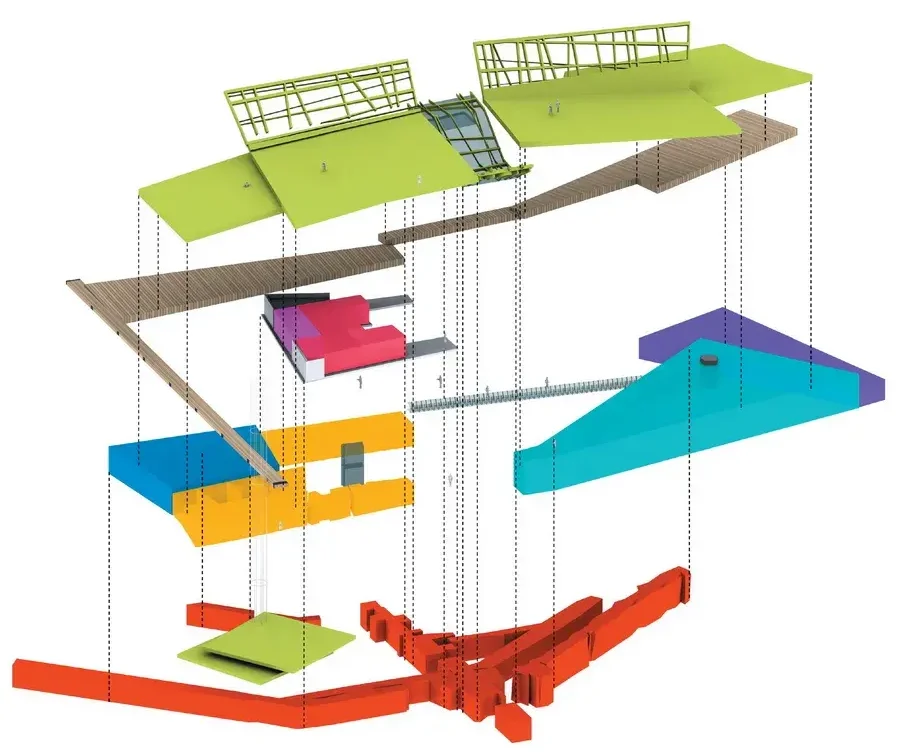
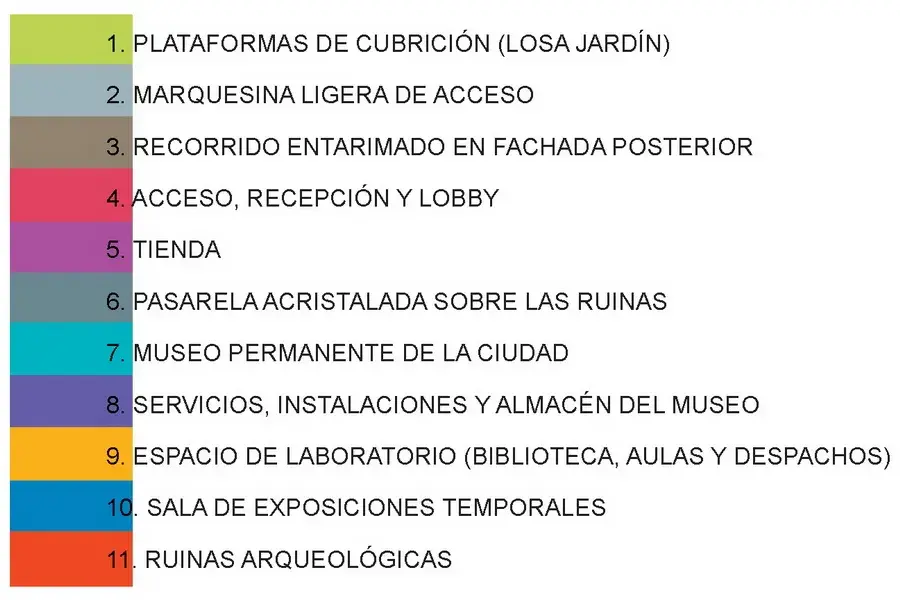
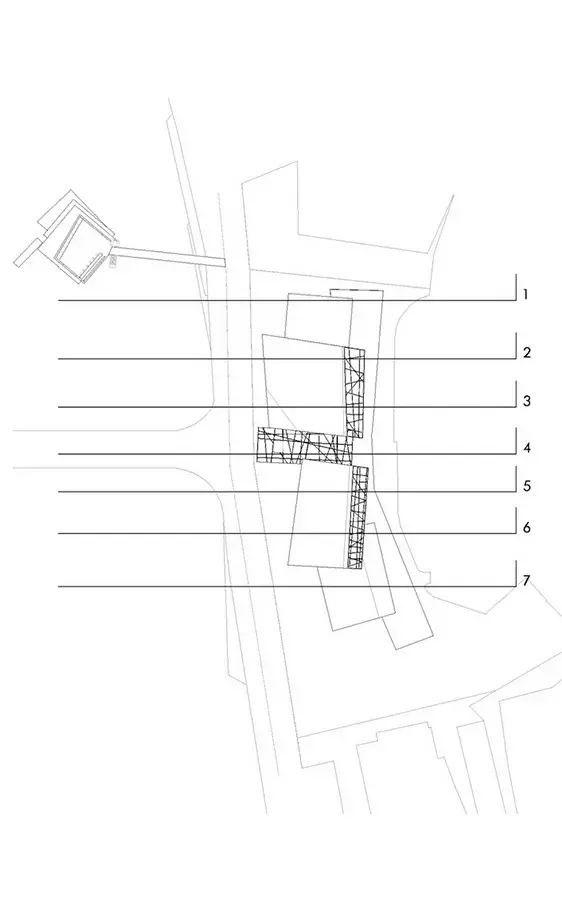
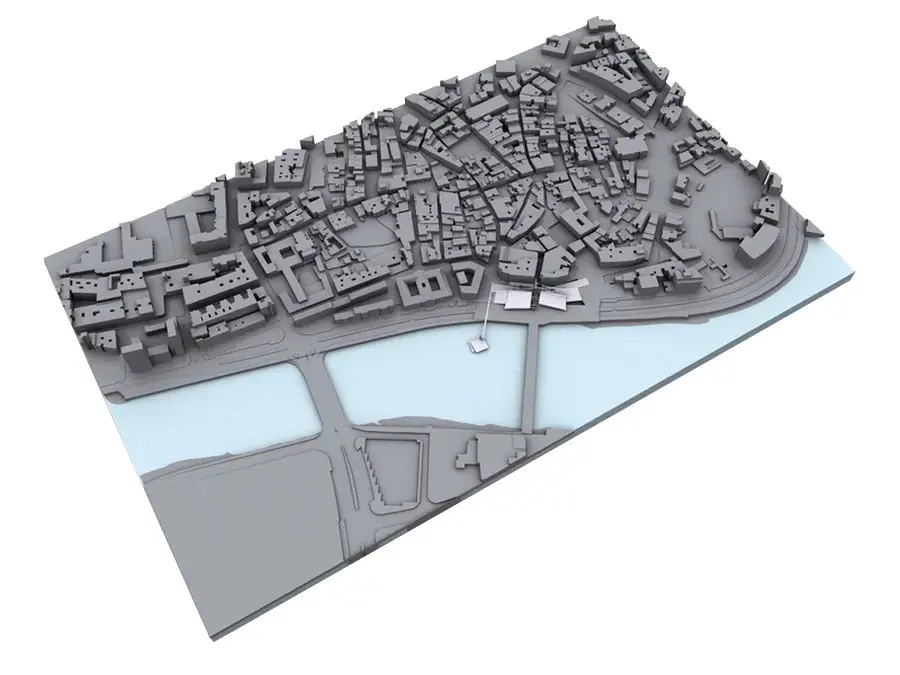
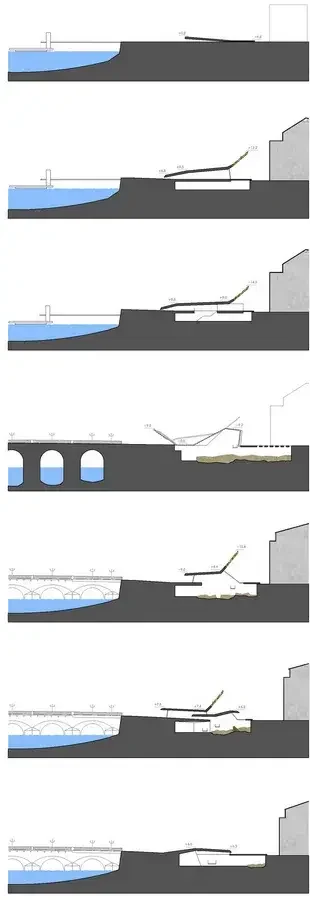
The adopted solution addresses the management and development of a small historiographic and archaeological museum, extending beyond the “enclosure/space” that houses the ruins to engage with the exterior. It occupies the plaza in front of the museum, organizes the cornice along the Ría, and even reaches the daring gesture of extending over the water as a “cultural floating platform.”
Moreover, the proposal functions as an “ideology” that goes beyond the program’s requirements, allowing for the future development of new recreational and cultural activities outside the museum building. This is supported by urban planning strategies that involve reorganizing vehicular traffic, optimizing public spaces, treating the waterfront edge, and even utilizing a “floating area” on the Ría as a platform for events on the water.
The new museum defines itself as a space that takes on the responsibility of preserving and disseminating the historical memory of the city of Pontevedra, reinforcing the citizens’ sense of identity and synthesizing the different interpretations from archaeological, historical, and ethnographic practices.
The museum is intended to be an interactive mirror of the city, laying the educational foundations of a “Heritage Interpretation Center”, while also providing a system for producing and sharing knowledge, creating a flow of understanding for future generations.
Furthermore, it will be an open and permeable space for external activities, maintaining a continuous relationship with the historical setting in which it is located and with the edge of the Ría to which it overlooks. Its exterior serves as a platform for multiple recreational and cultural activities, transforming the space it creates into a landmark and gathering place. It embraces modernity while maintaining a constant dialogue with tradition and history.