Relojería Alemana Born 6

Palma de Mallorca

Relojería Alemana Born 6

Palma de Mallorca
Detail1/2
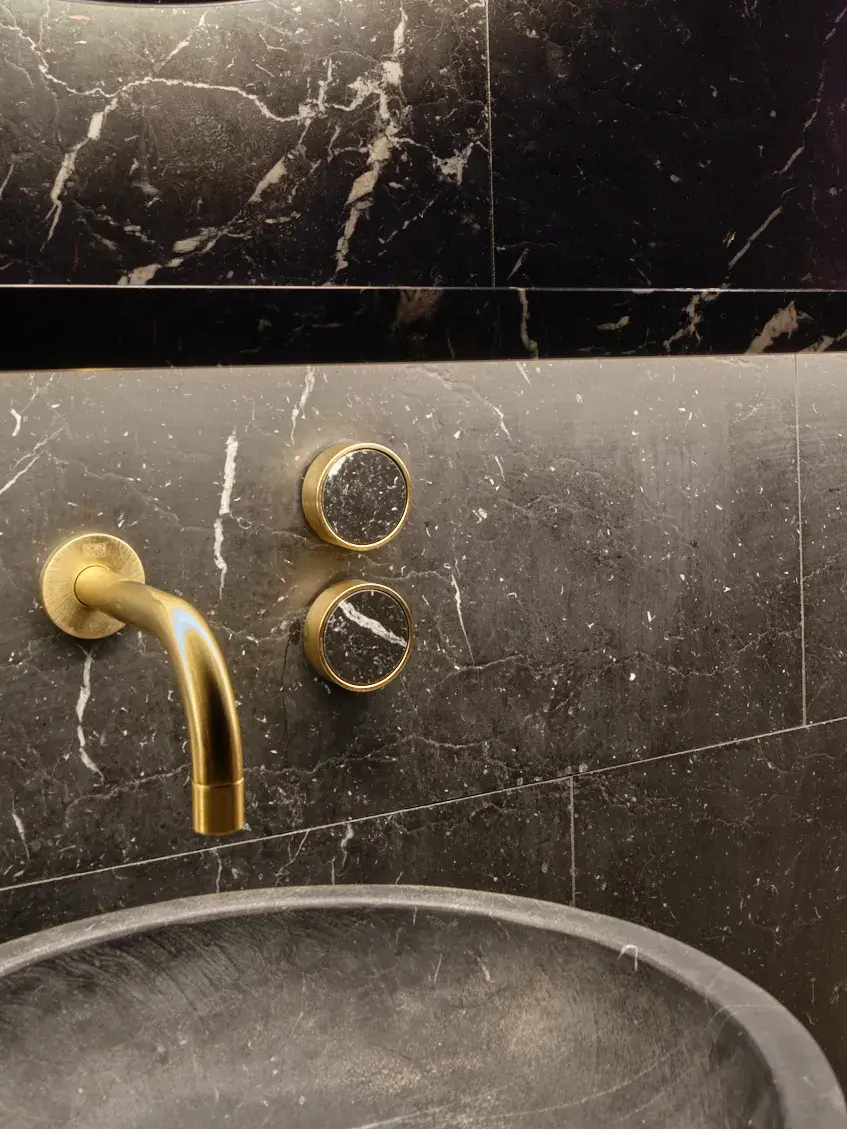
Bathroom1/2

Relojería Alemana Born 6

Palma de Mallorca

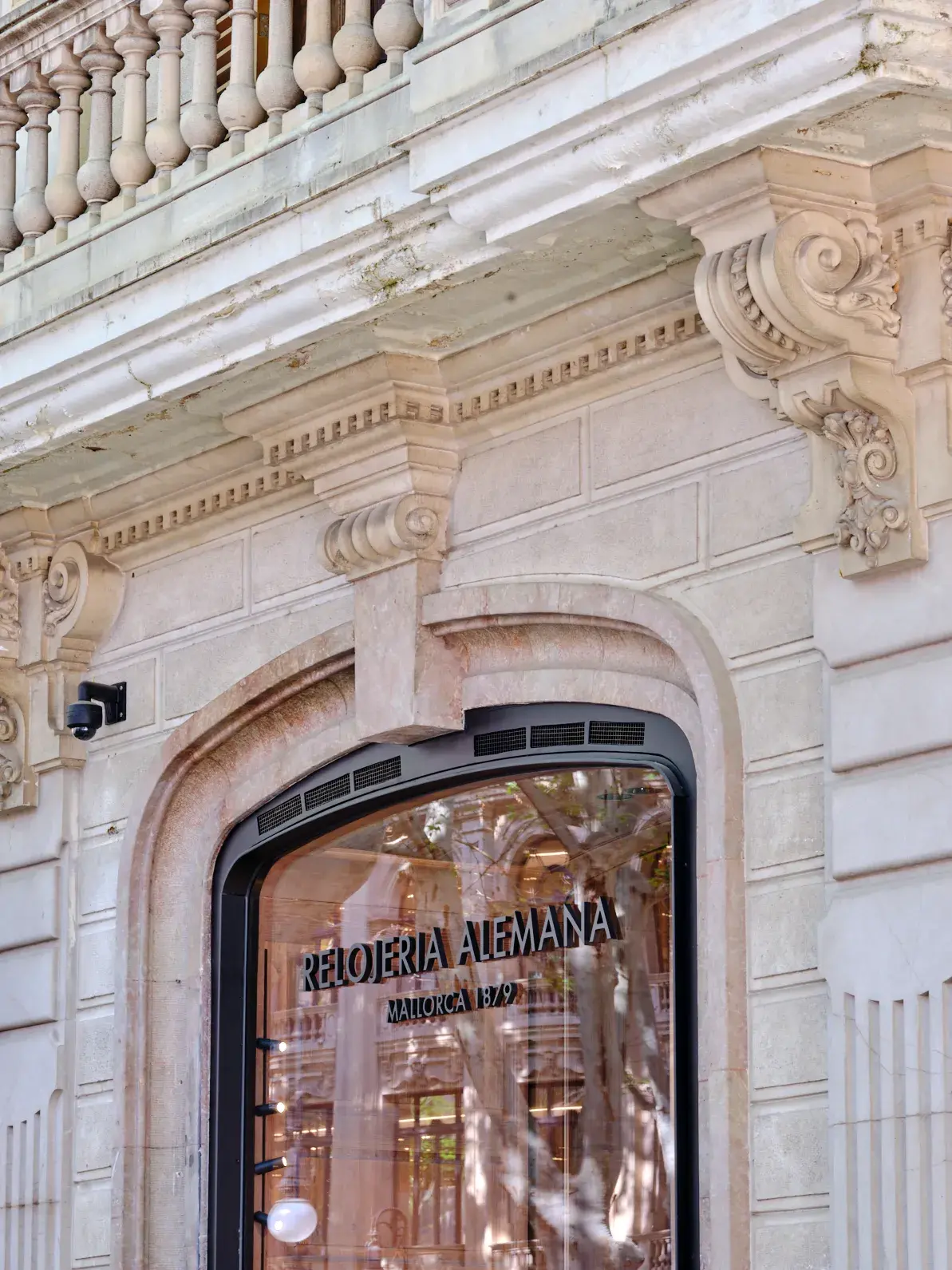
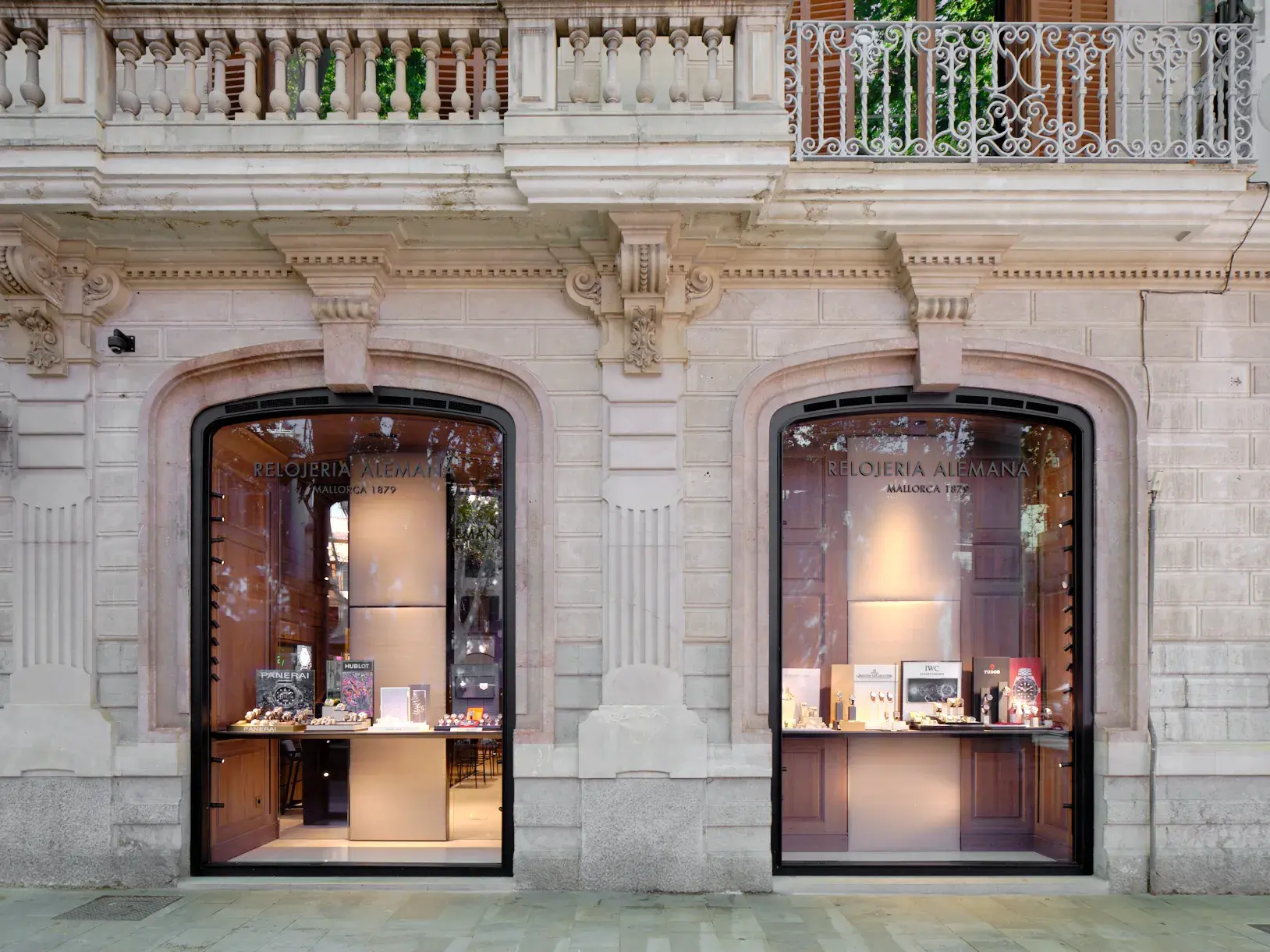
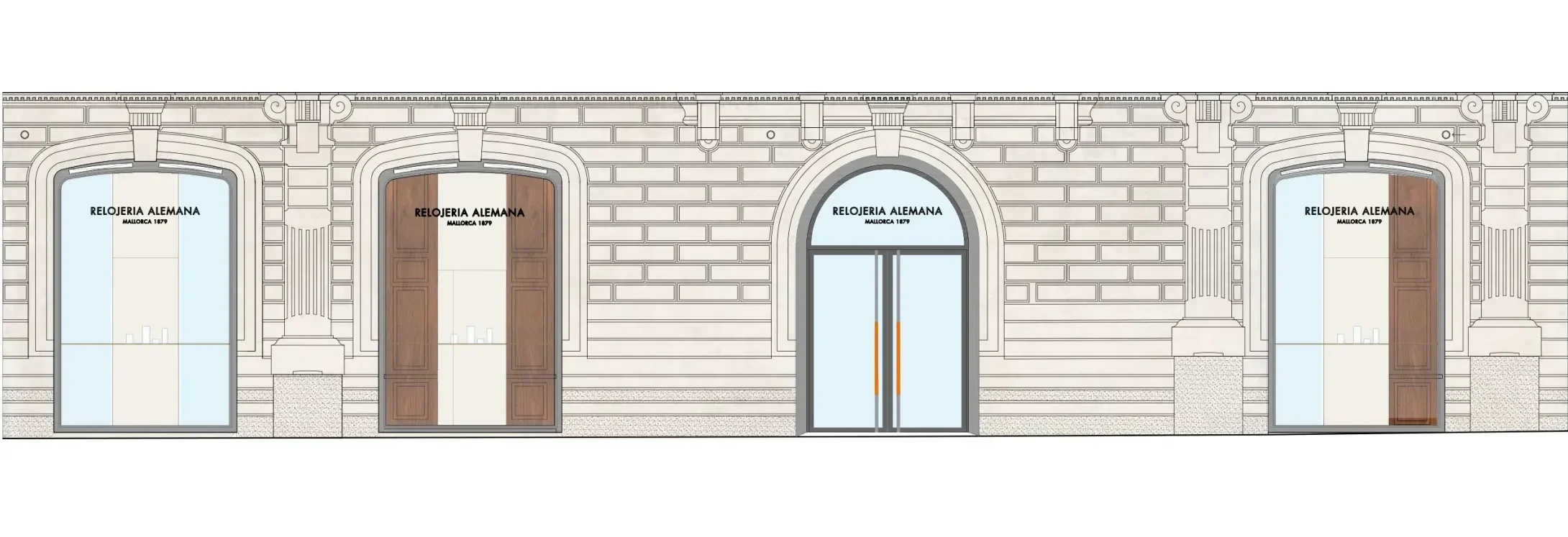
Located in the heart of Paseo del Borne, the new store for Relojería Alemana represents a new chapter in the architectural evolution of a firm with more than 145 years of history, founded in 1879. Over the course of more than a century, the Mallorcan house has established itself as a reference in fine watchmaking and jewelry, building an identity in which time is not merely a product, but a legacy.

Relojería Alemana Born 6

Palma de Mallorca

Located in the heart of Paseo del Borne, the new store for Relojería Alemana represents a new chapter in the architectural evolution of a firm with more than 145 years of history, founded in 1879. Over the course of more than a century, the Mallorcan house has established itself as a reference in fine watchmaking and jewelry, building an identity in which time is not merely a product, but a legacy.

At a moment when luxury retail oscillates between literal nostalgia and fleeting spectacle, the project proposes a different approach: a critical reading of tradition.

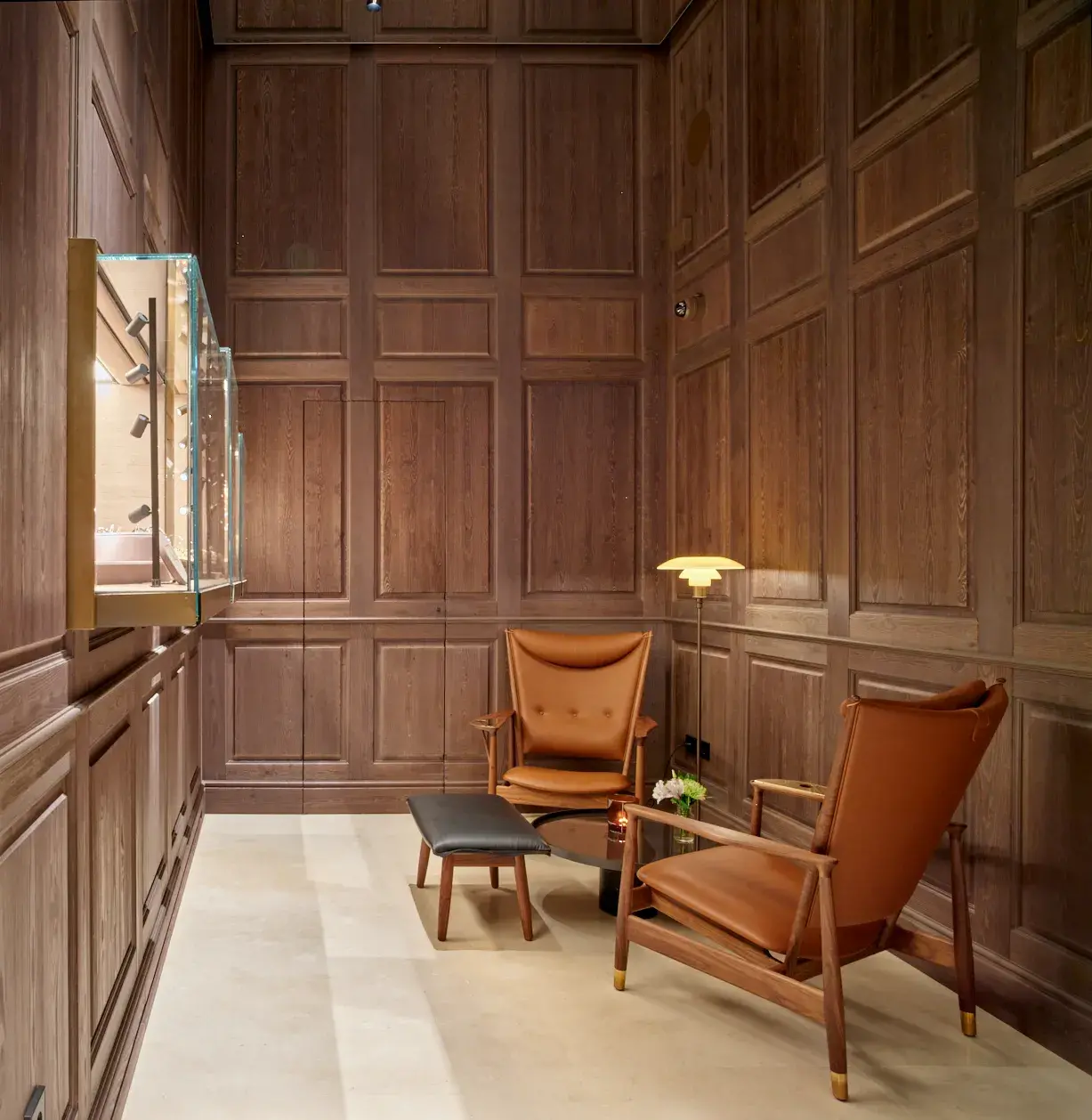
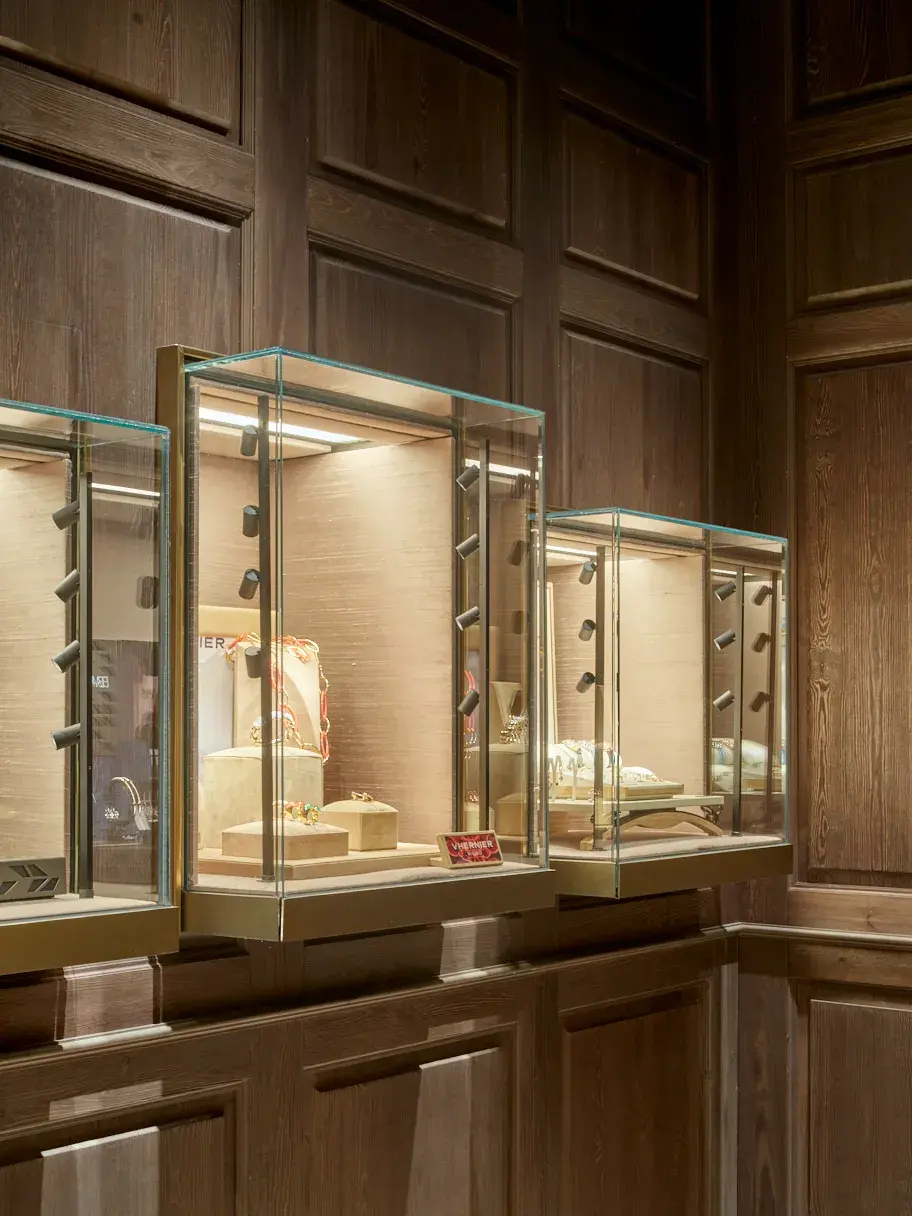
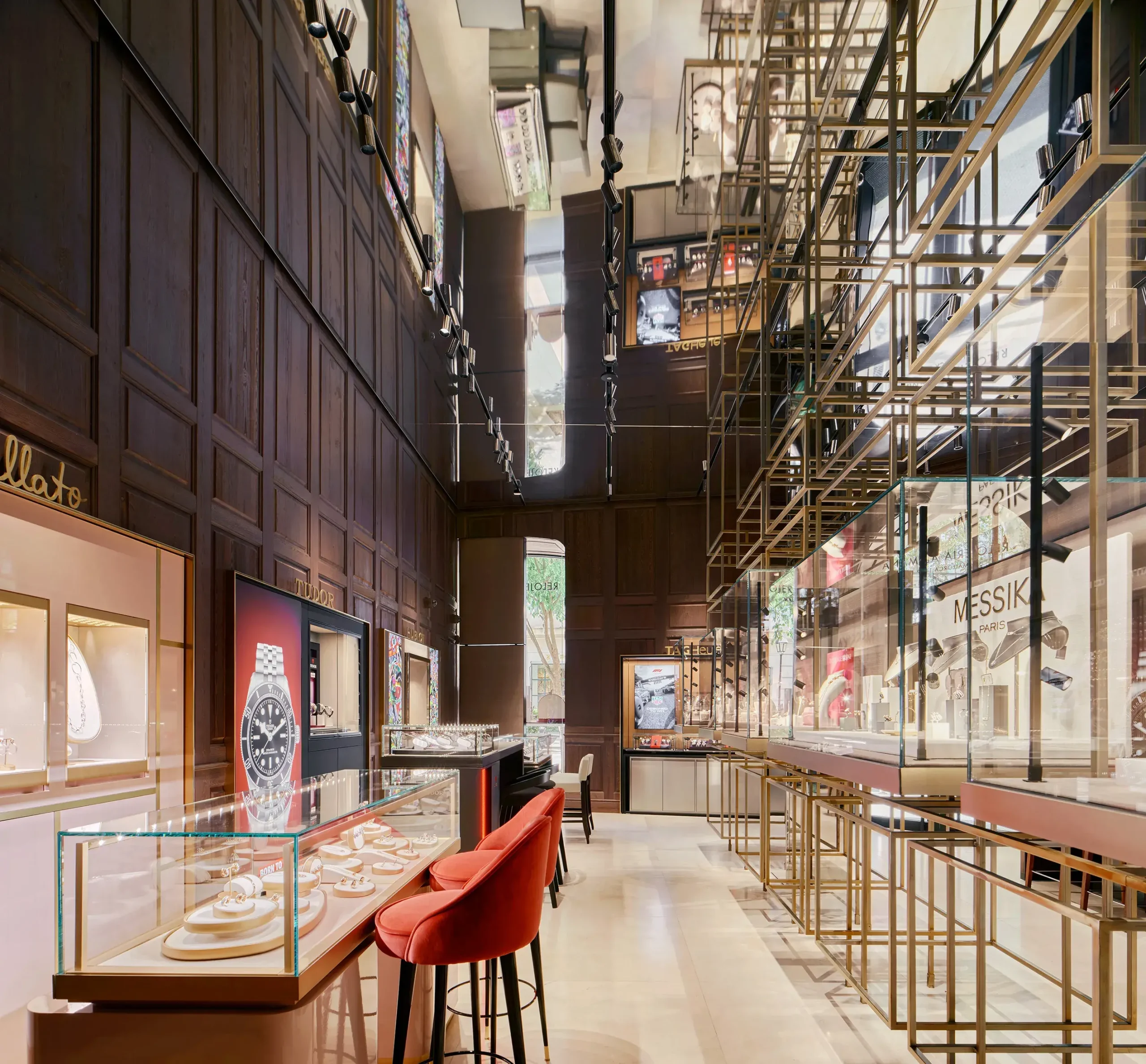
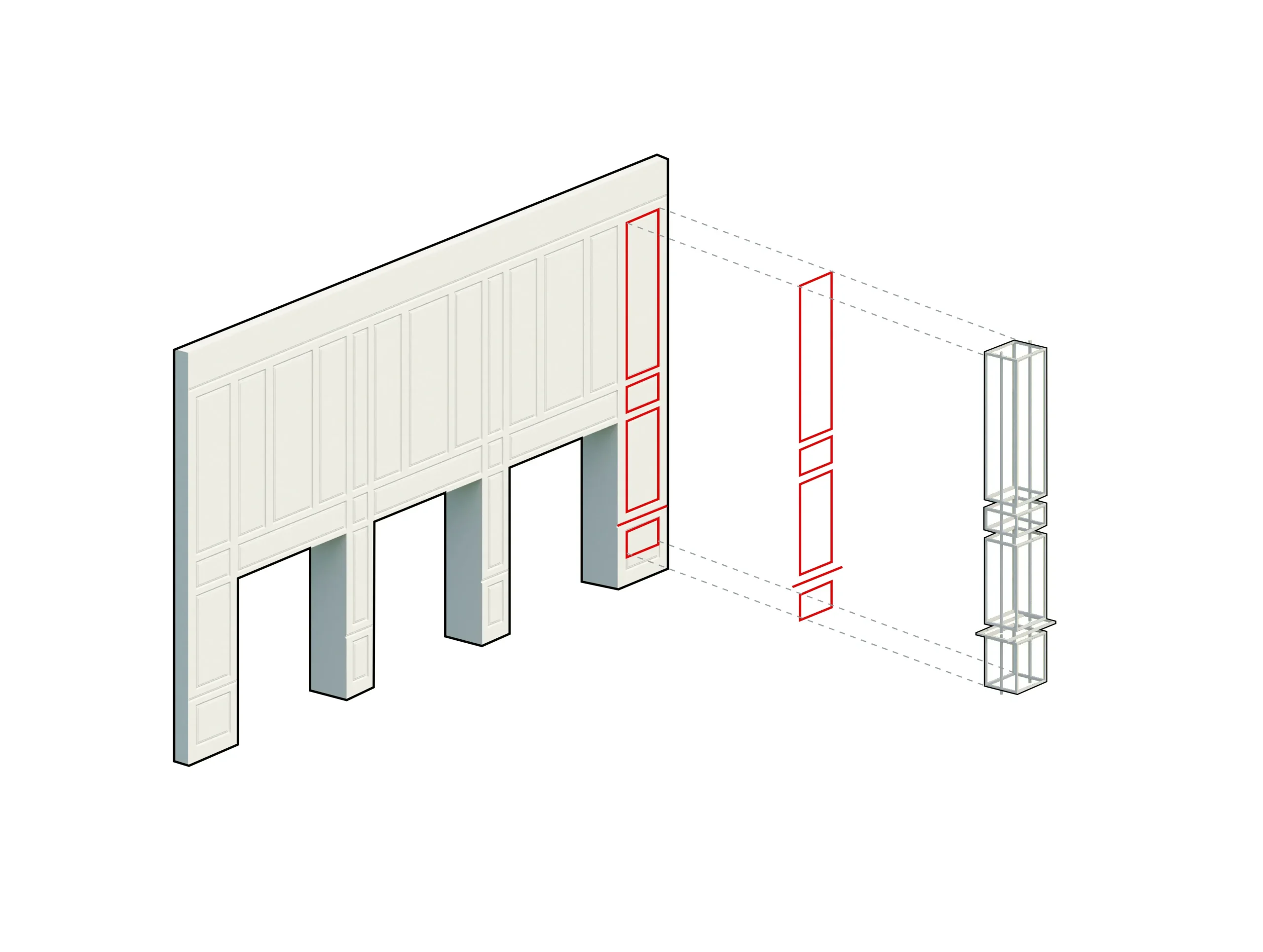
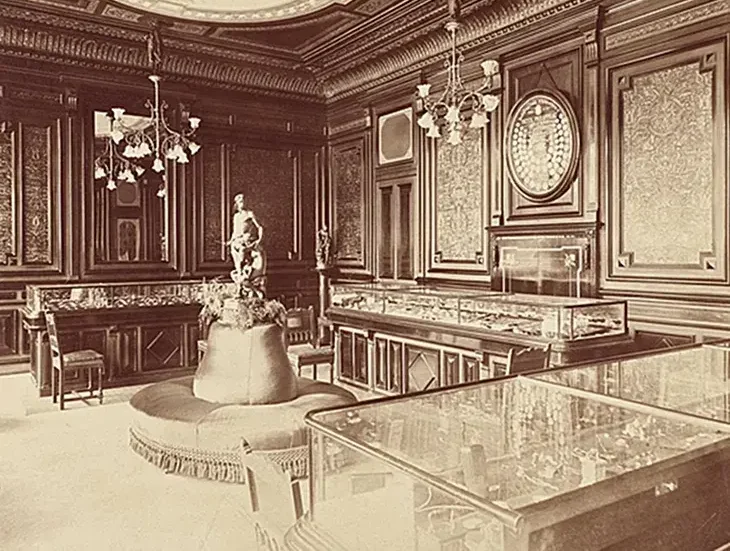
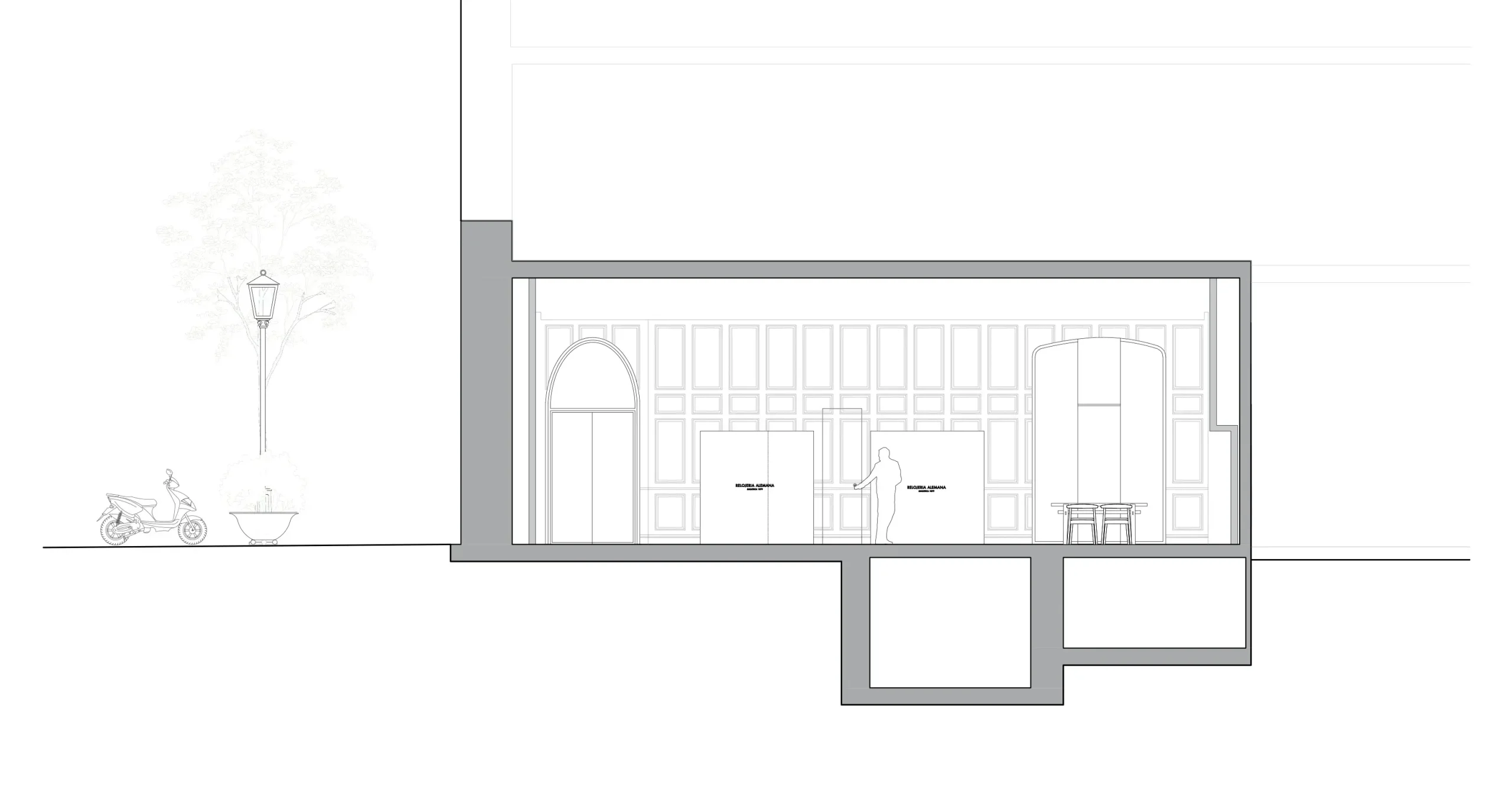
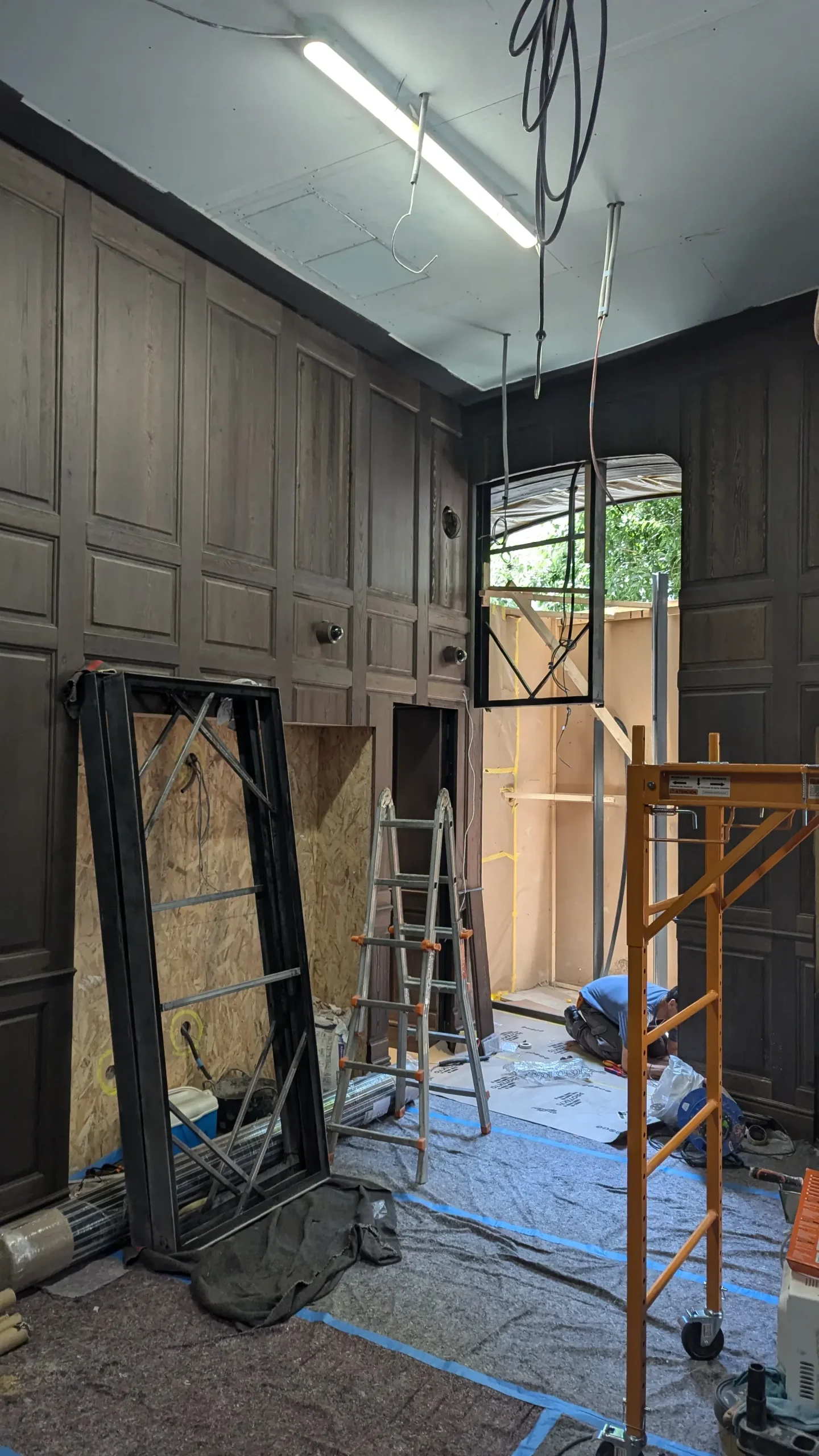
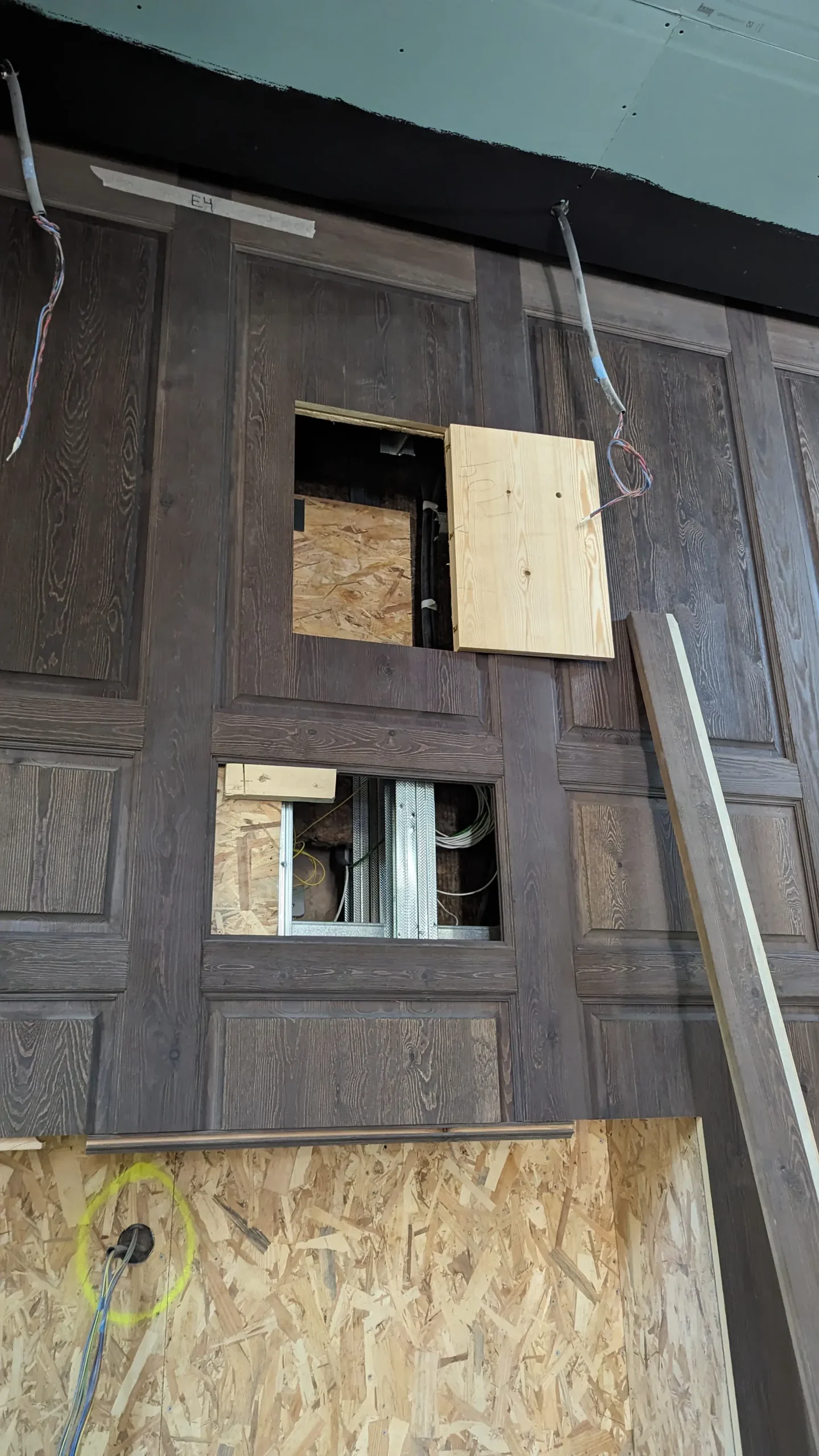
The starting point is the classic wooden paneling that has historically defined the spatial identity of Relojería Alemana, as well as that of traditional European watch boutiques. Rather than replicating it literally, the project reclaims and reinterprets it. The perimeter of the store is entirely clad in dark wood paneling that evokes this tradition — proportion, rhythm, moldings, verticality — establishing a dense, intimate and timeless atmosphere.
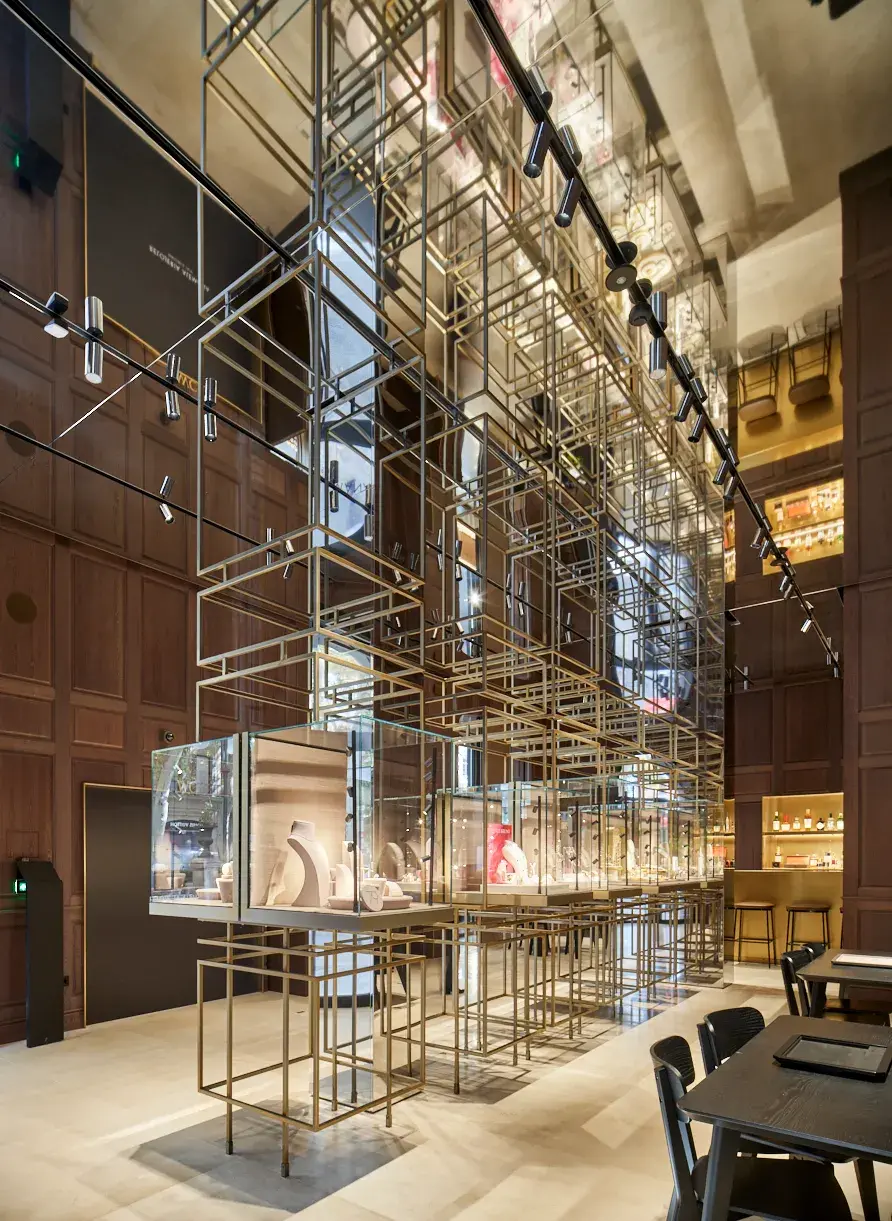
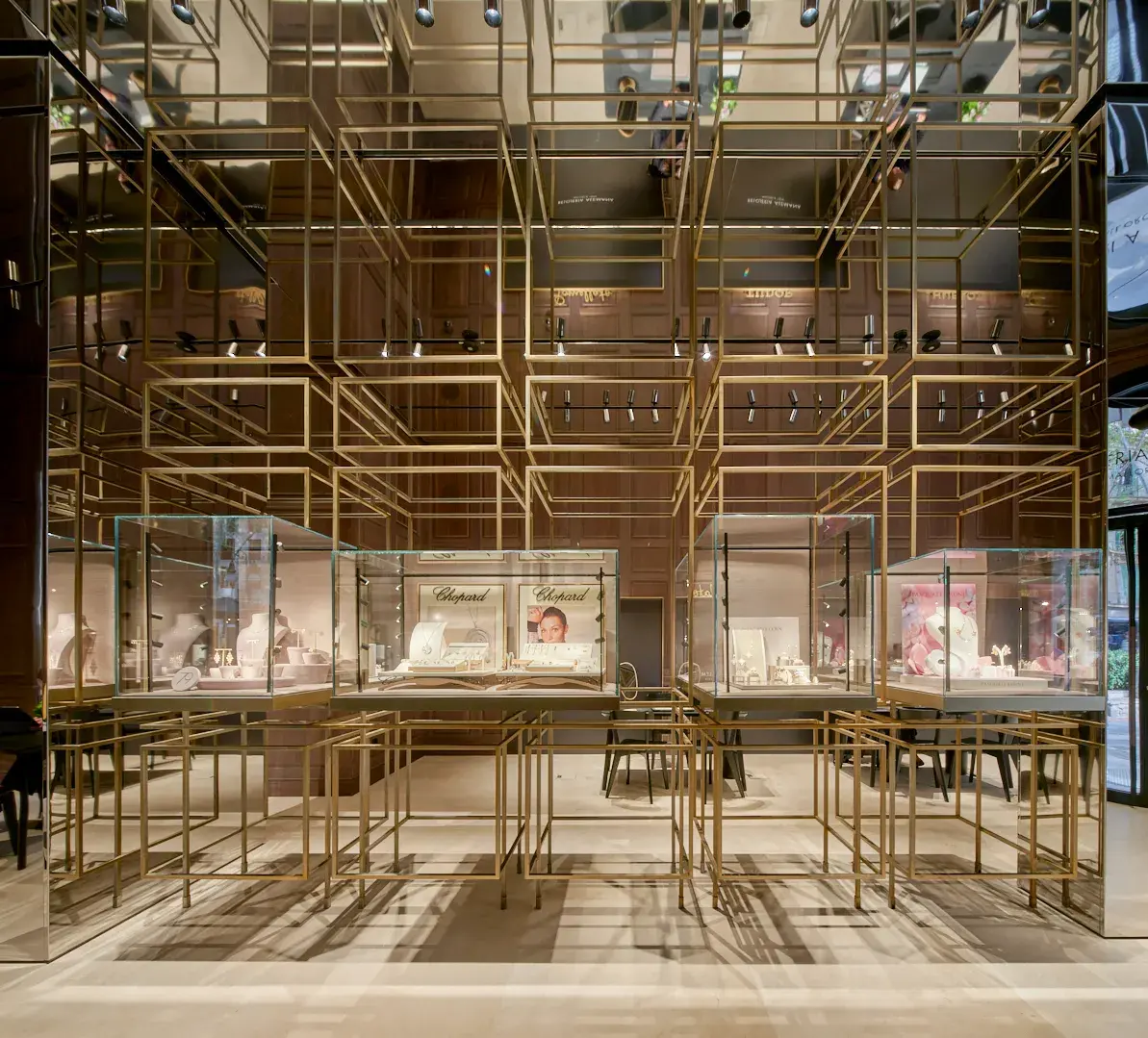
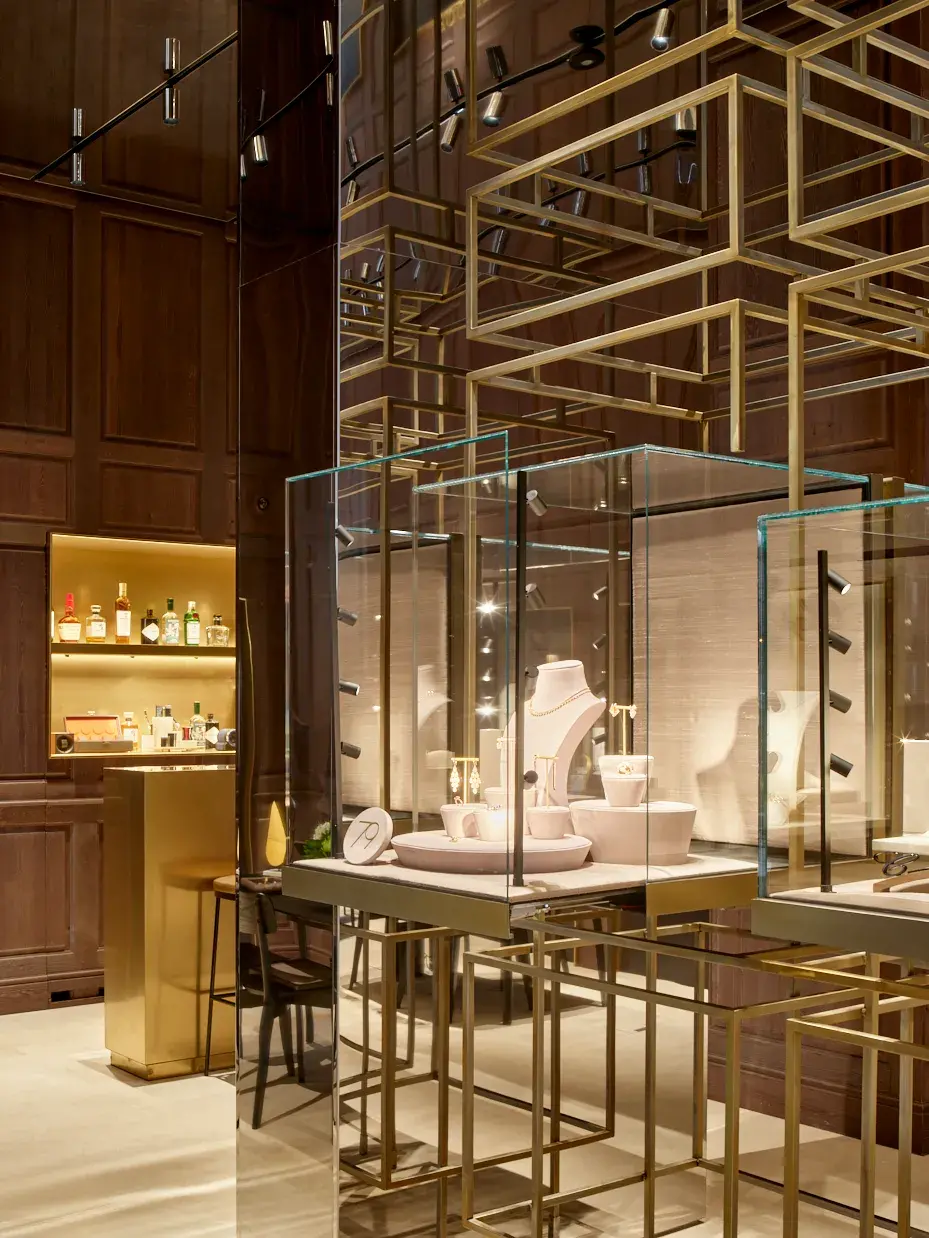
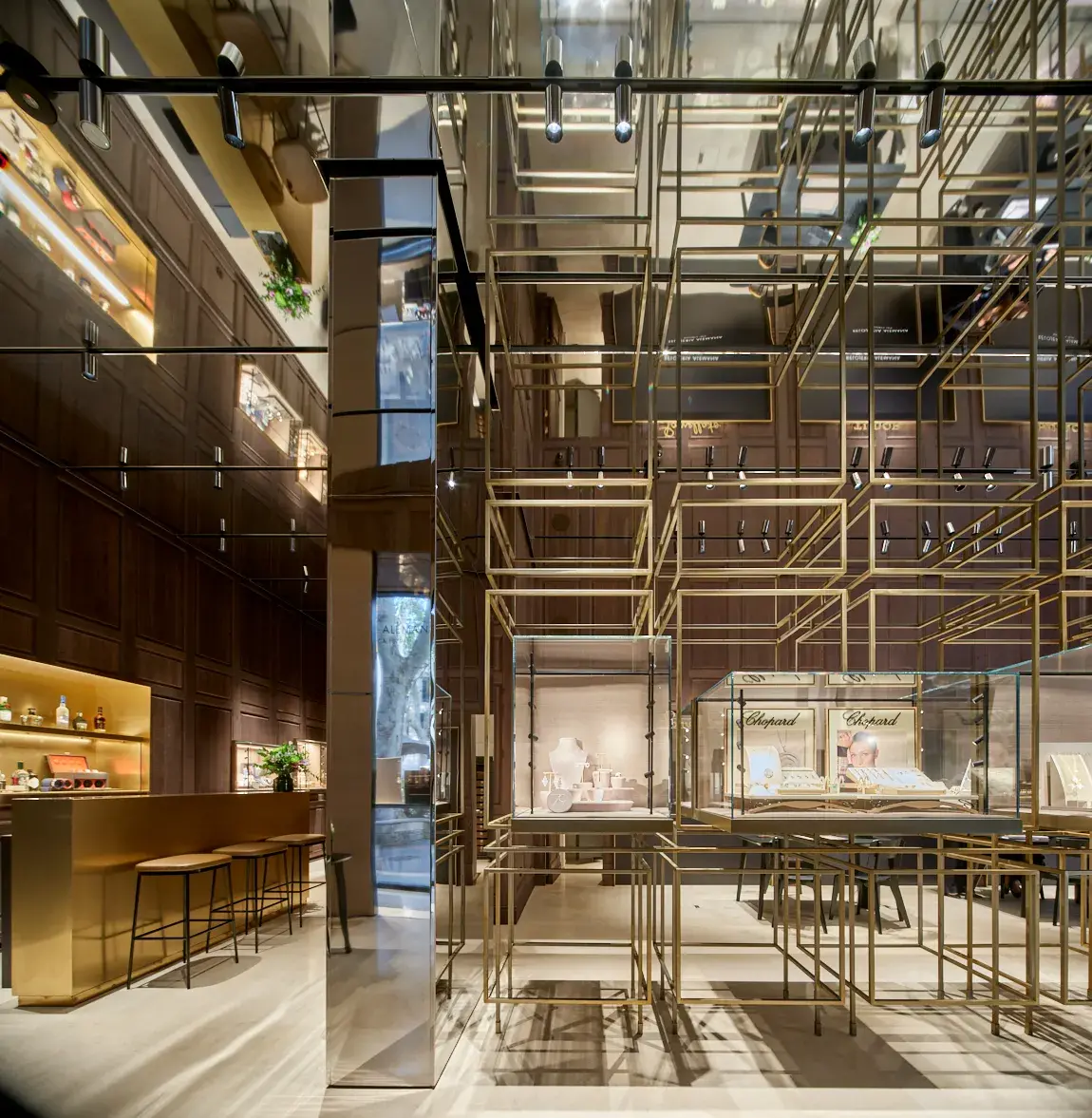
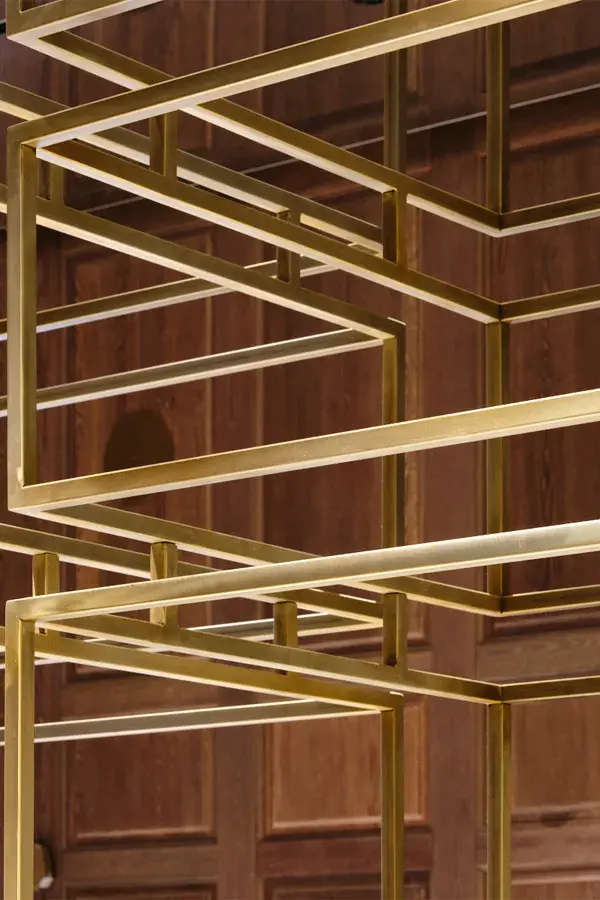
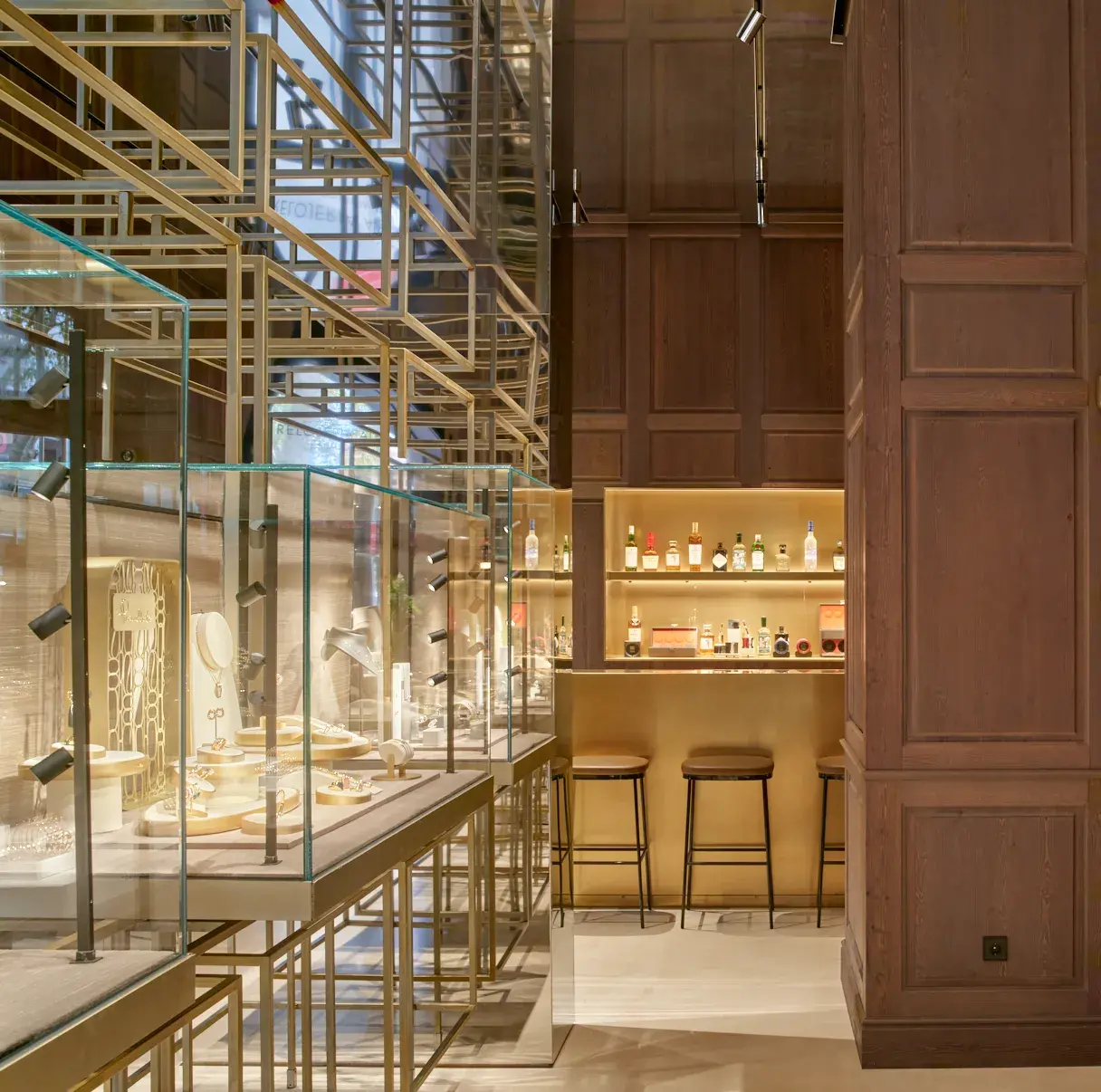
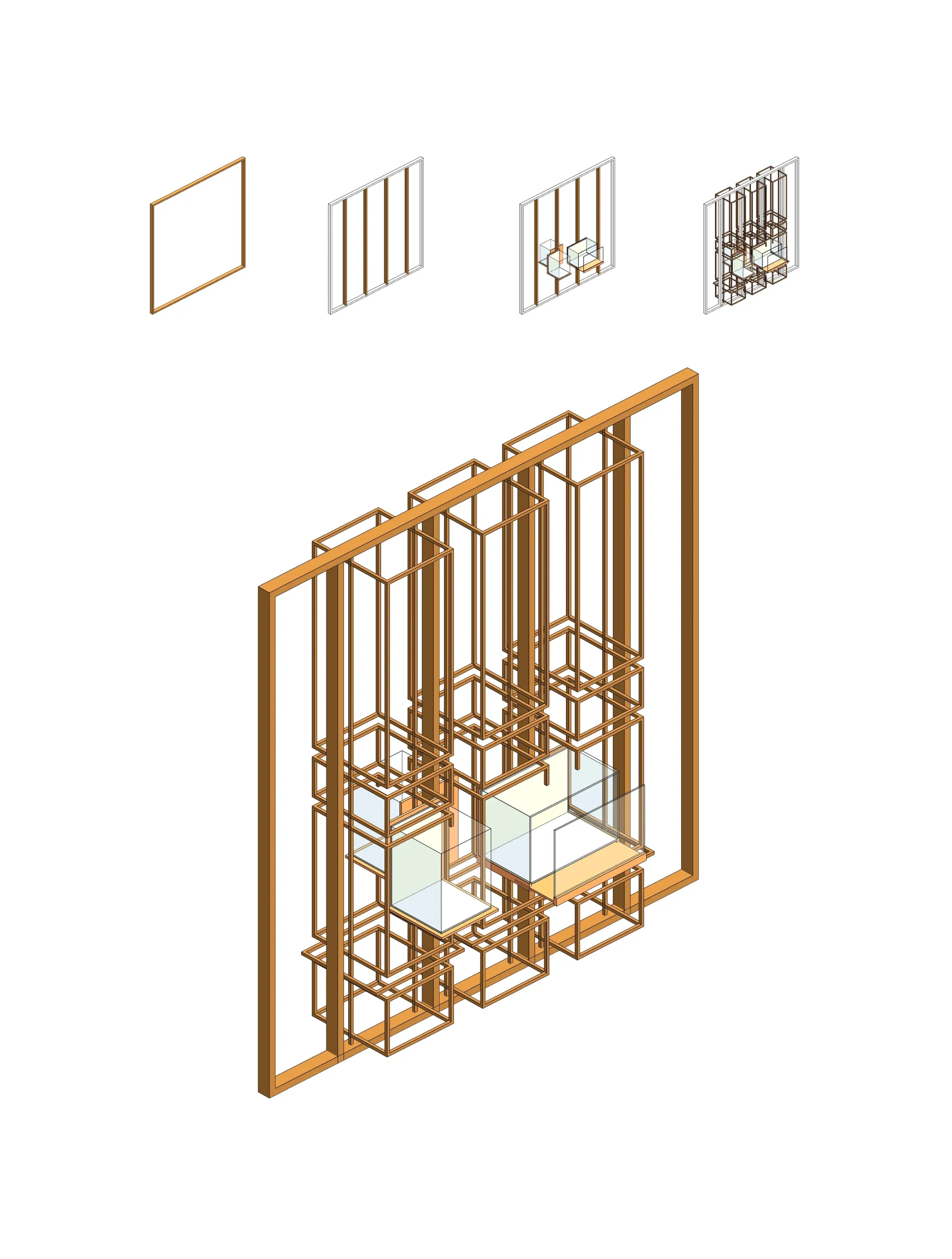
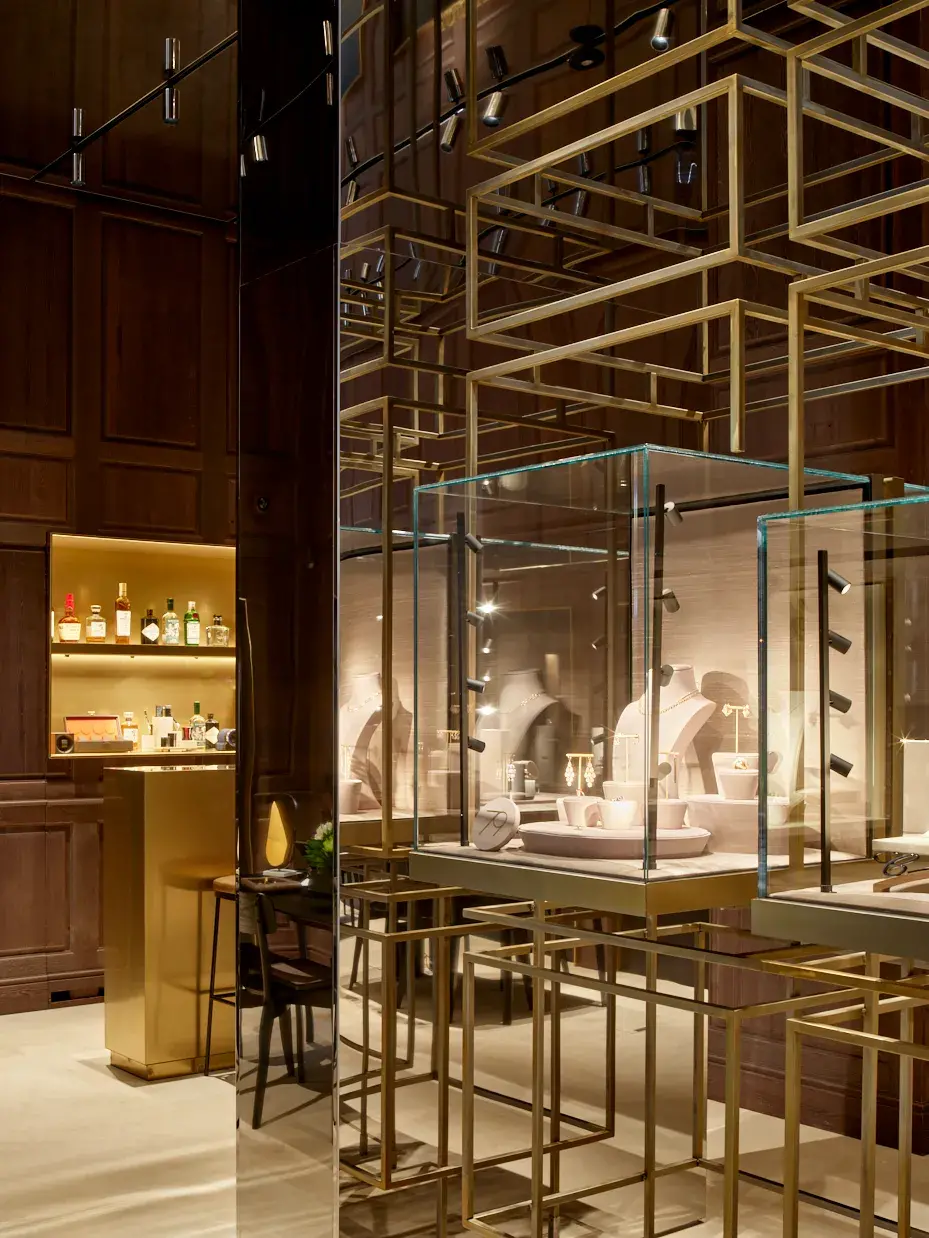
Yet the intervention goes beyond stylistic restoration. The central gesture consists of “X-raying” this classical language — extracting its structure, deconstructing its moldings, retaining its essence. The result is a sculptural piece positioned at the center of the space: a three-dimensional brass structure that operates as an abstract and contemporary version of the historic paneling. A kind of ornamental skeleton that translates decoration into structure.

Within this framework, glass vitrines are inserted, appearing to float inside the metallic grid. The piece is neither furniture nor a simple display element; it is a spatial device that organizes the store, defines circulation and transforms exhibition into a three-dimensional experience.

Relojería Alemana Born 6

Palma de Mallorca

Relojería Alemana Born 6

Palma de Mallorca
Within this framework, glass vitrines are inserted, appearing to float inside the metallic grid. The piece is neither furniture nor a simple display element; it is a spatial device that organizes the store, defines circulation and transforms exhibition into a three-dimensional experience.

Above it, a mirrored stretched textile ceiling duplicates the structure, generating a sense of infinite depth. The grid is reflected, multiplied and projected upward, intensifying the perception of lightness and precision. Luxury ceases to be expressed solely through mass and materiality, and instead manifests as line, geometry and spatial tension.

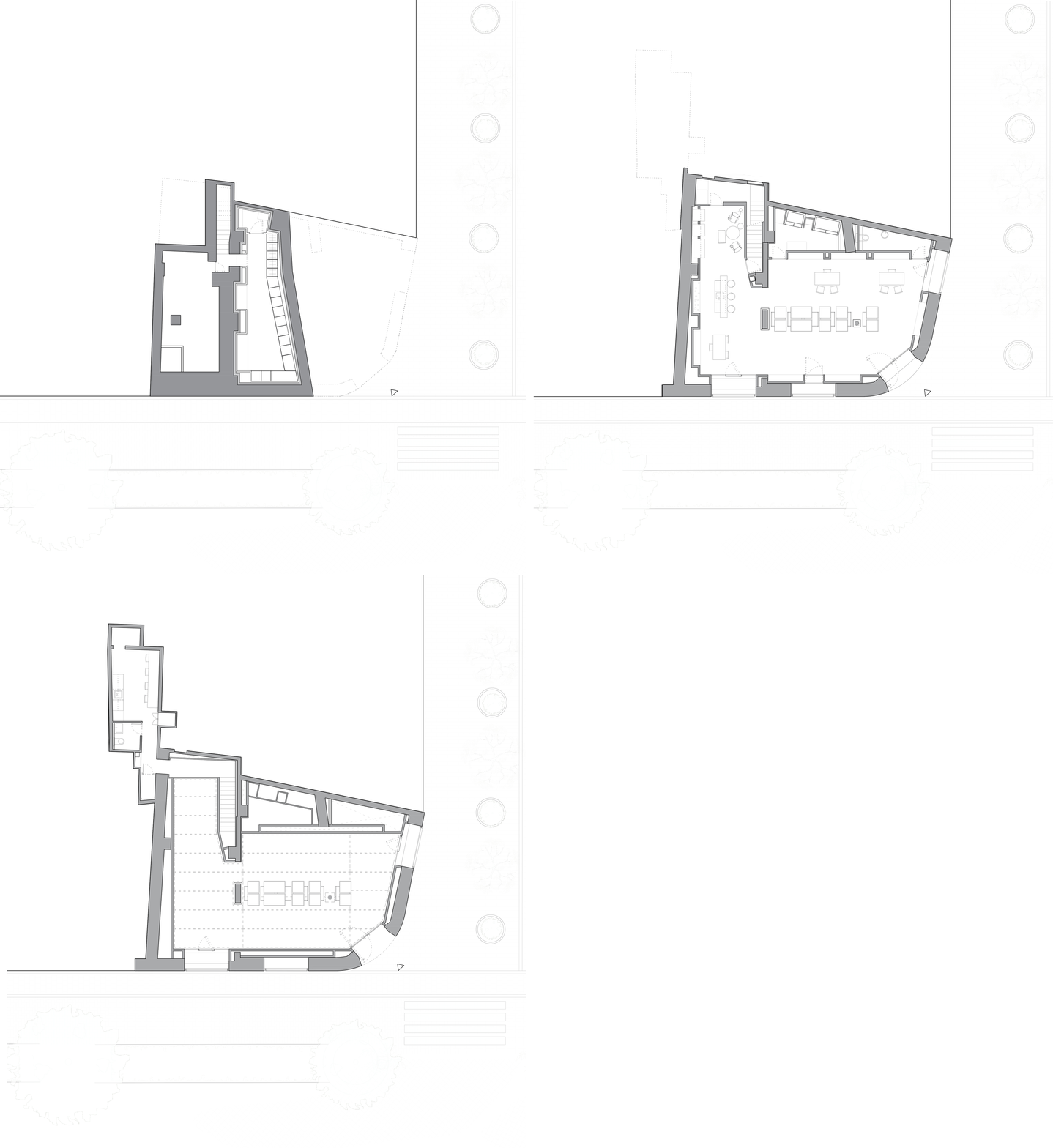
Conceived as a multi-brand space, the store integrates corners for Panerai, Omega, Tudor and other international houses, alongside Relojería Alemana’s own jewelry collection. These spaces are distributed along the perimeter as subtle incisions within the paneling, allowing each brand to retain its identity without disrupting the architectural unity of the whole. The perimeter thus becomes a continuous score in which each insertion introduces a variation within a shared spatial grammar.
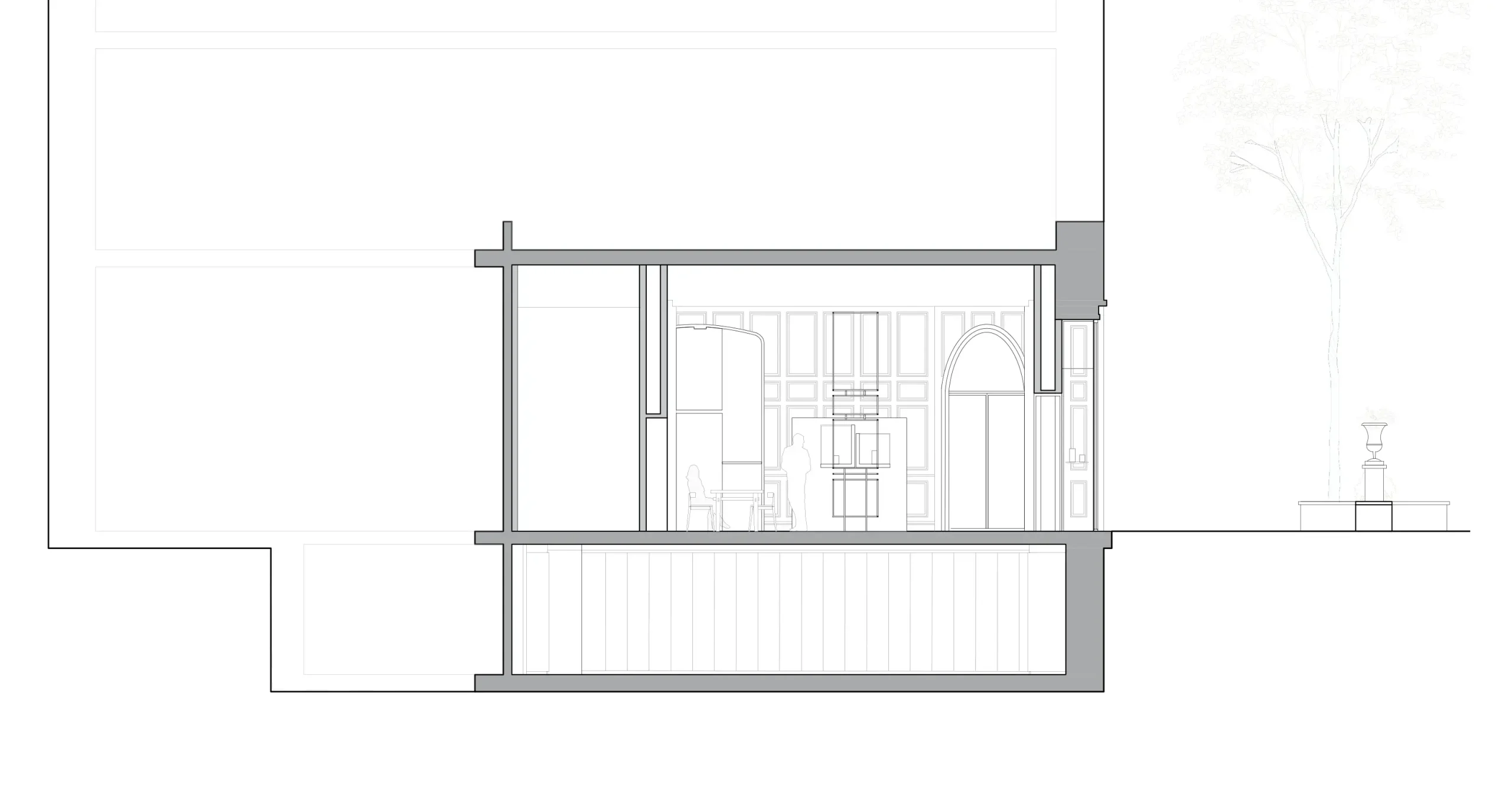
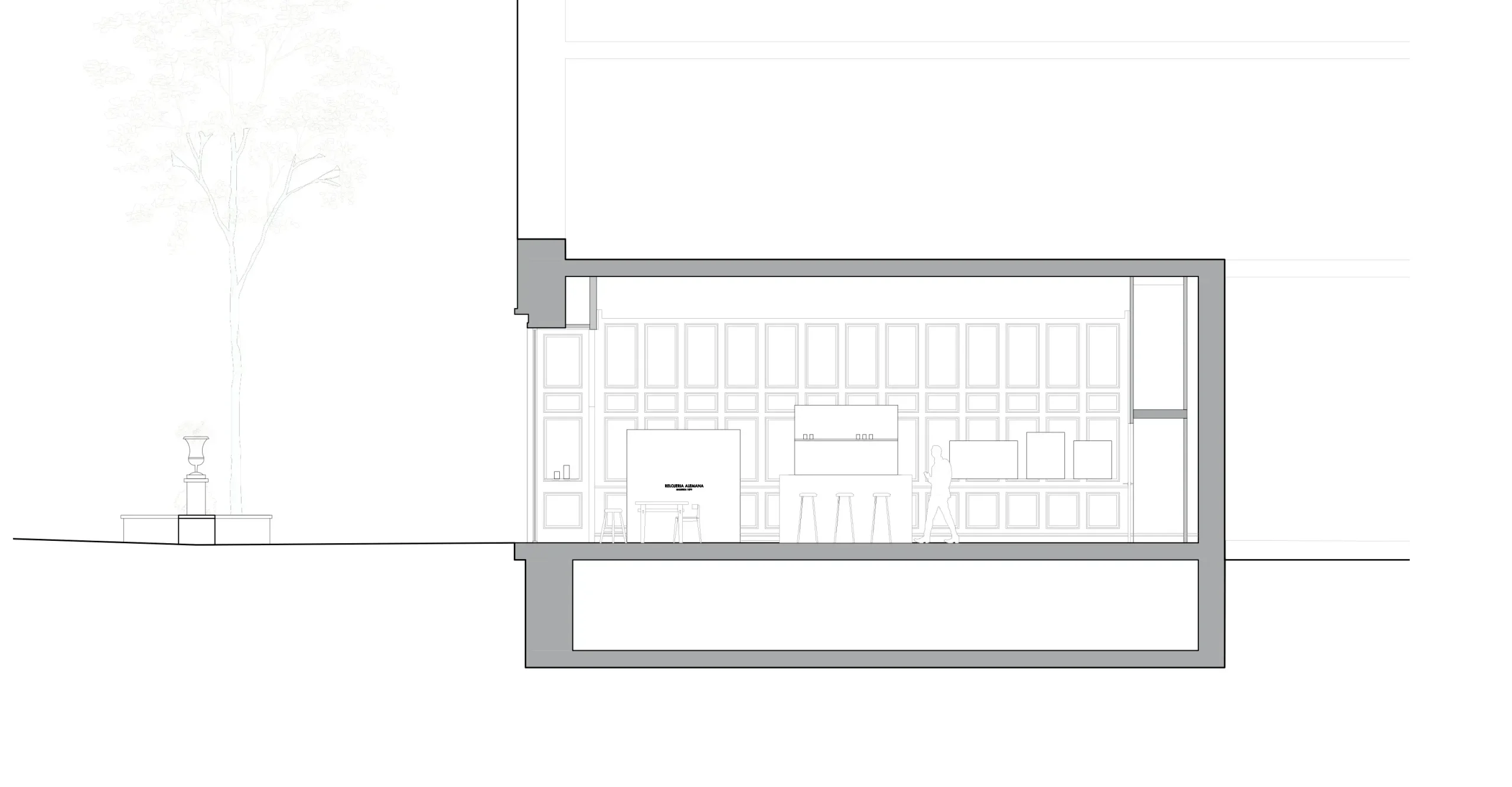
Section A1/3
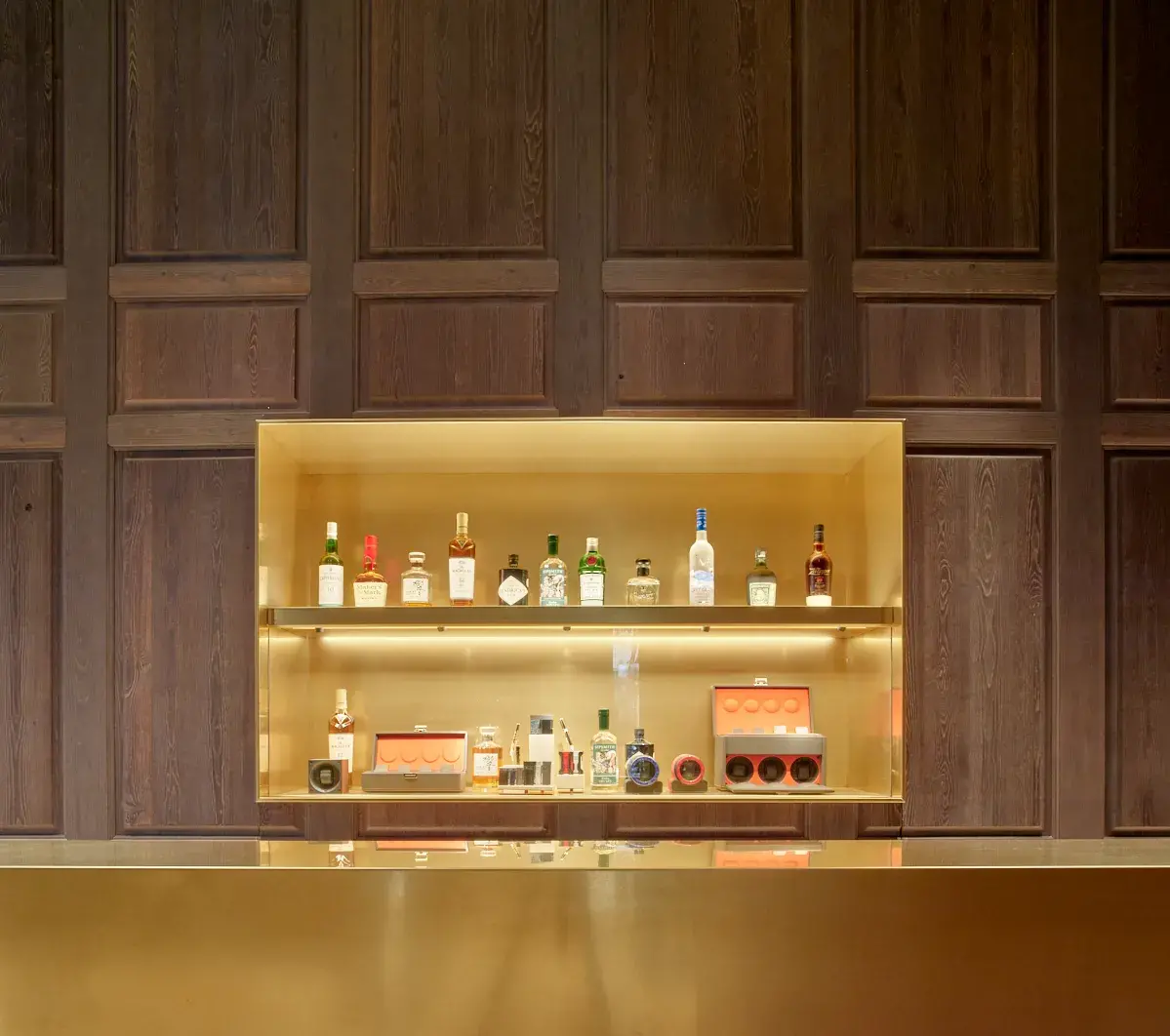
Among these incisions, an unexpected element emerges: the bar. Conceived as another corner, it is clad in stainless steel with a brass finish and accompanied by a monolithic front counter. Here, timepieces engage in dialogue with a curated selection of premium bottles, reinforcing the notion of hospitality and permanence. In contemporary luxury retail, experience extends beyond transaction; it is built through shared time.

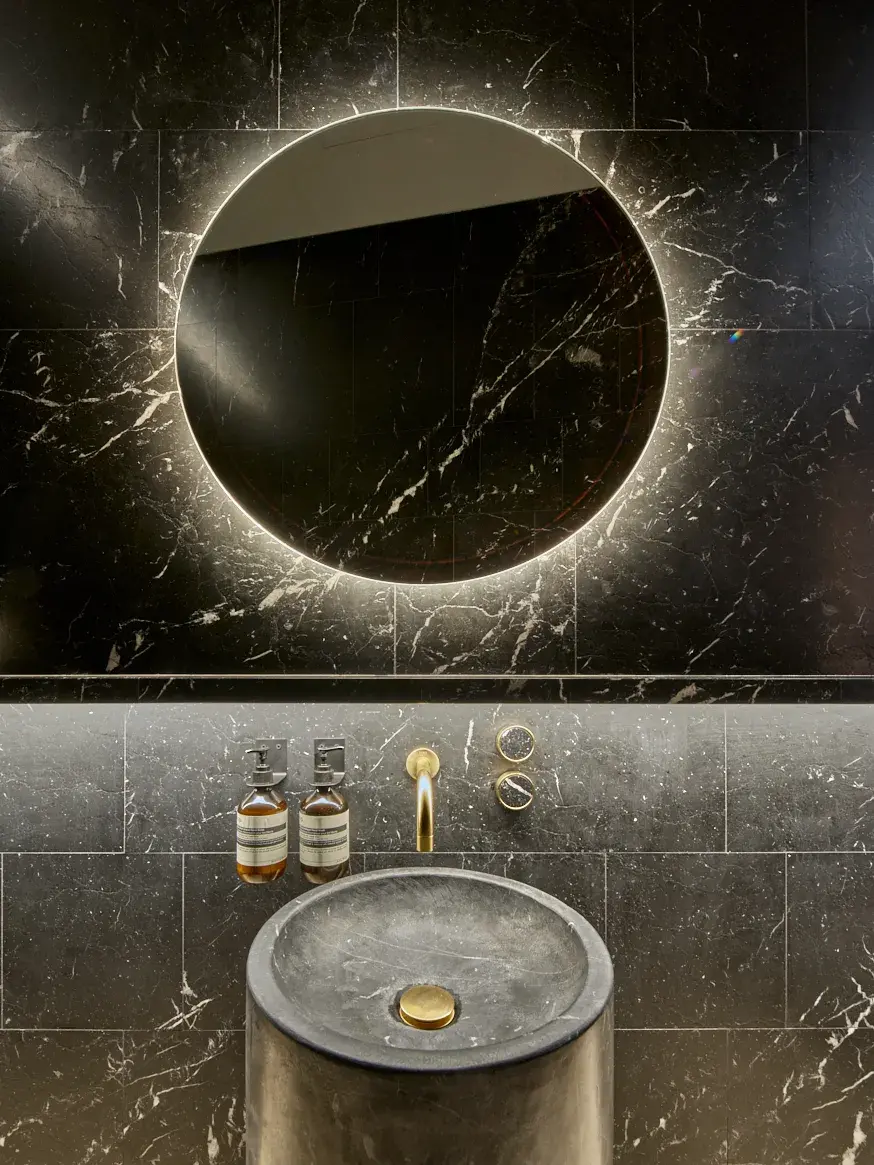
Toward the rear of the space, a more secluded area provides an intimate setting for private consultations and special sales. The project is completed with a customer restroom finished in black marble, storage and a secure vault in the basement, and a back-office area on the mezzanine level.

The architecture of Paseo del Borne 6 does not seek to compete with history, but to engage in dialogue with it. If watches measure time, space interprets it. The project transforms tradition into structure and memory into geometry, projecting more than a century of identity into the future.
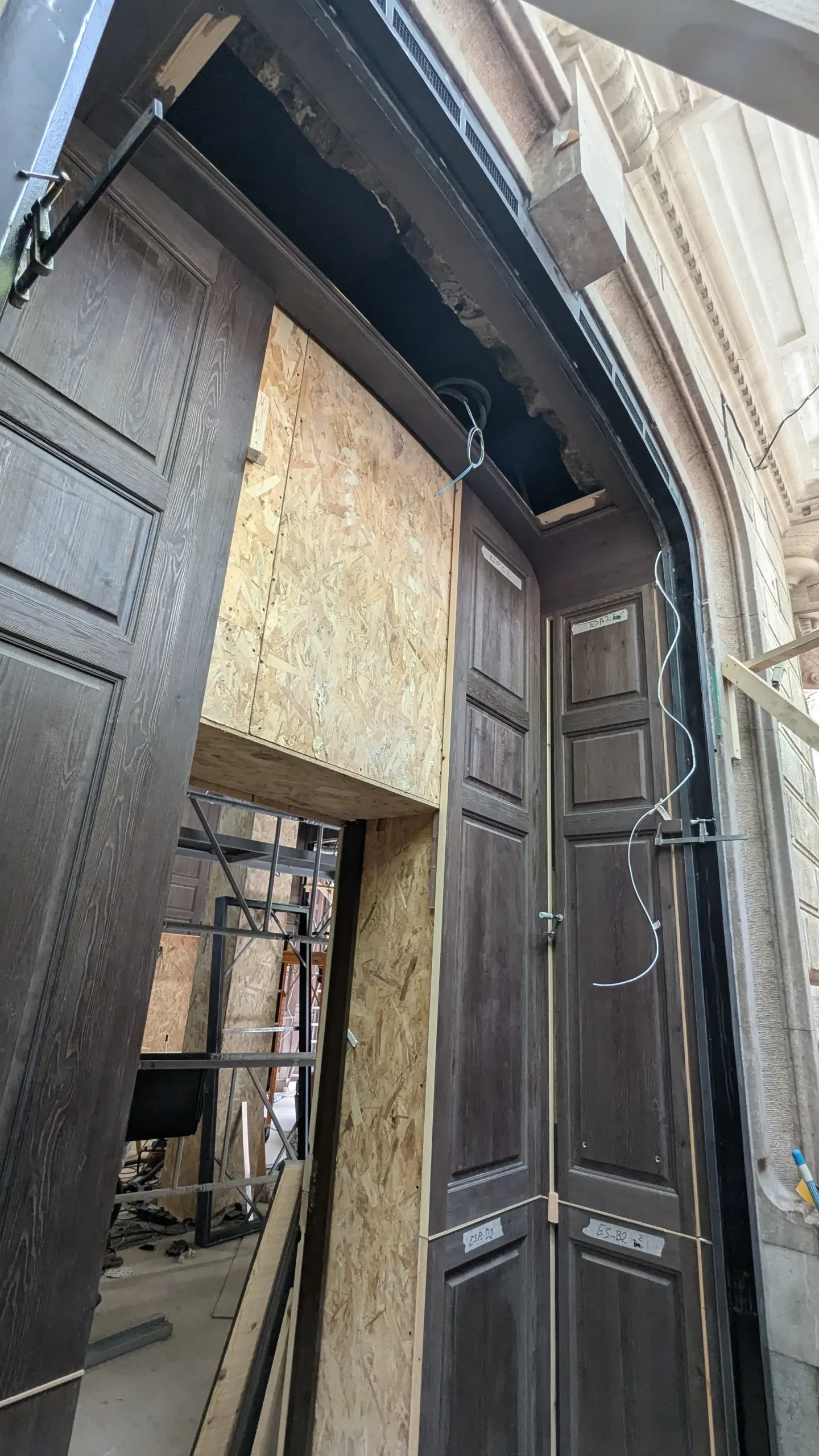
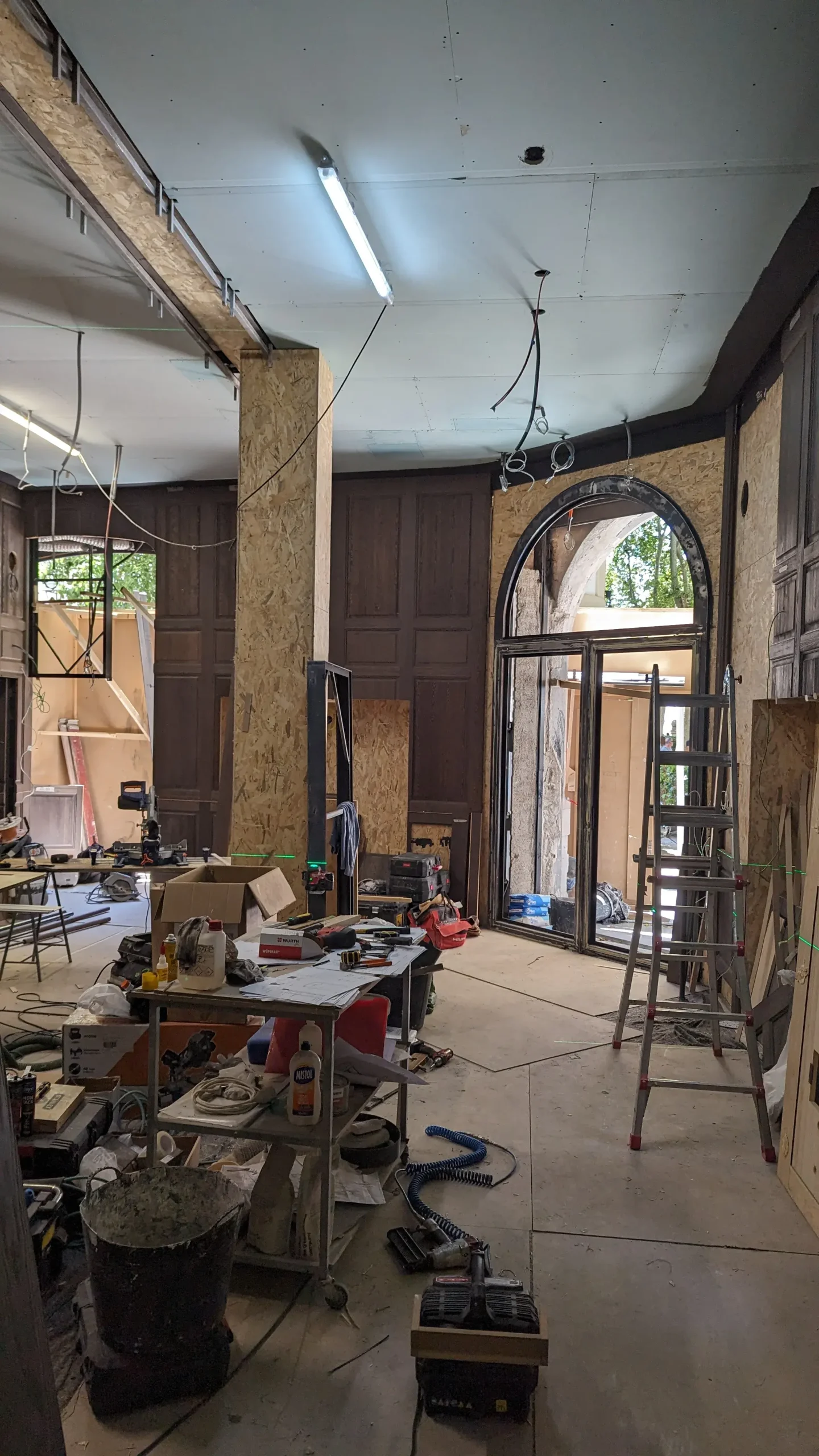
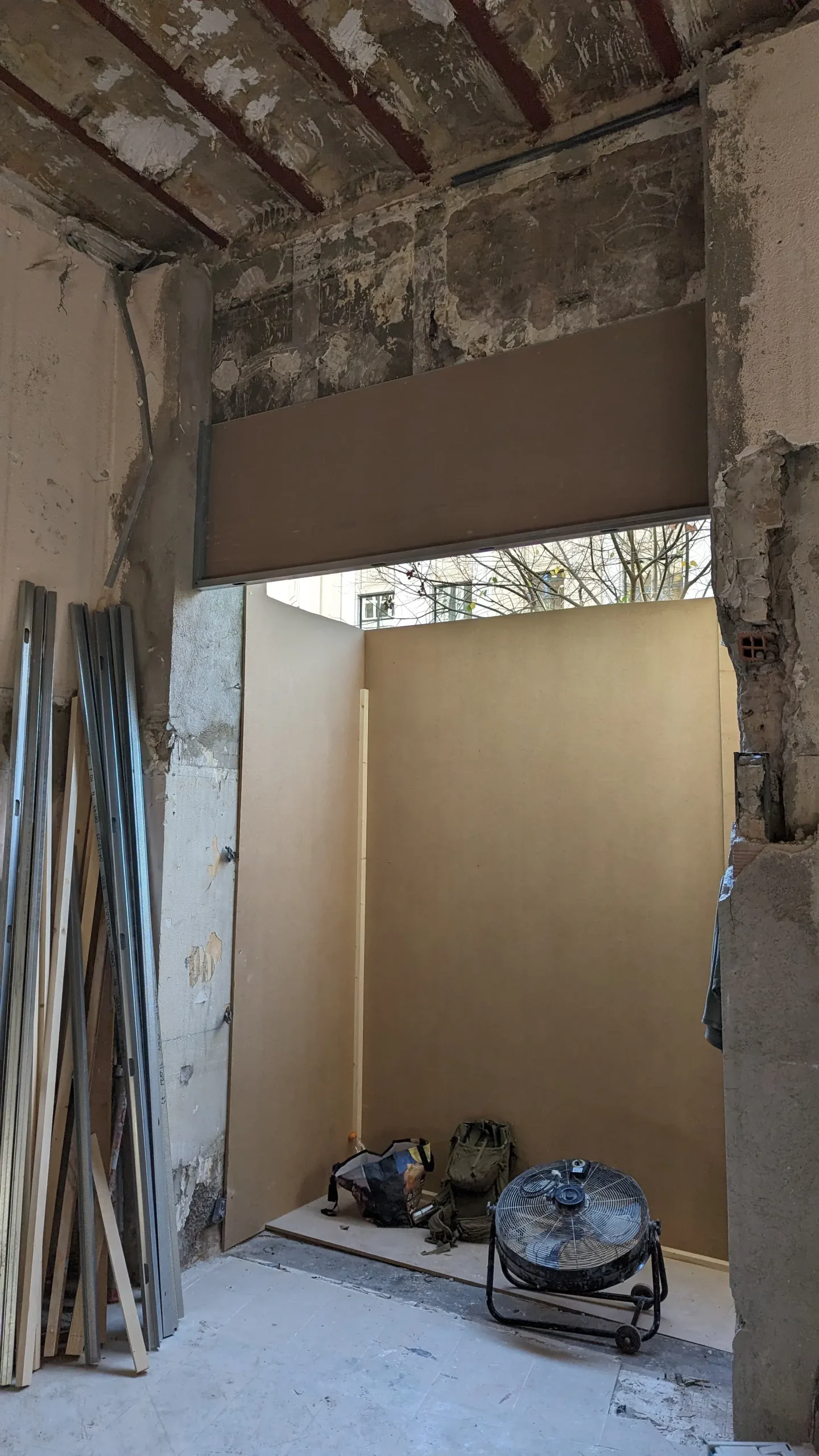
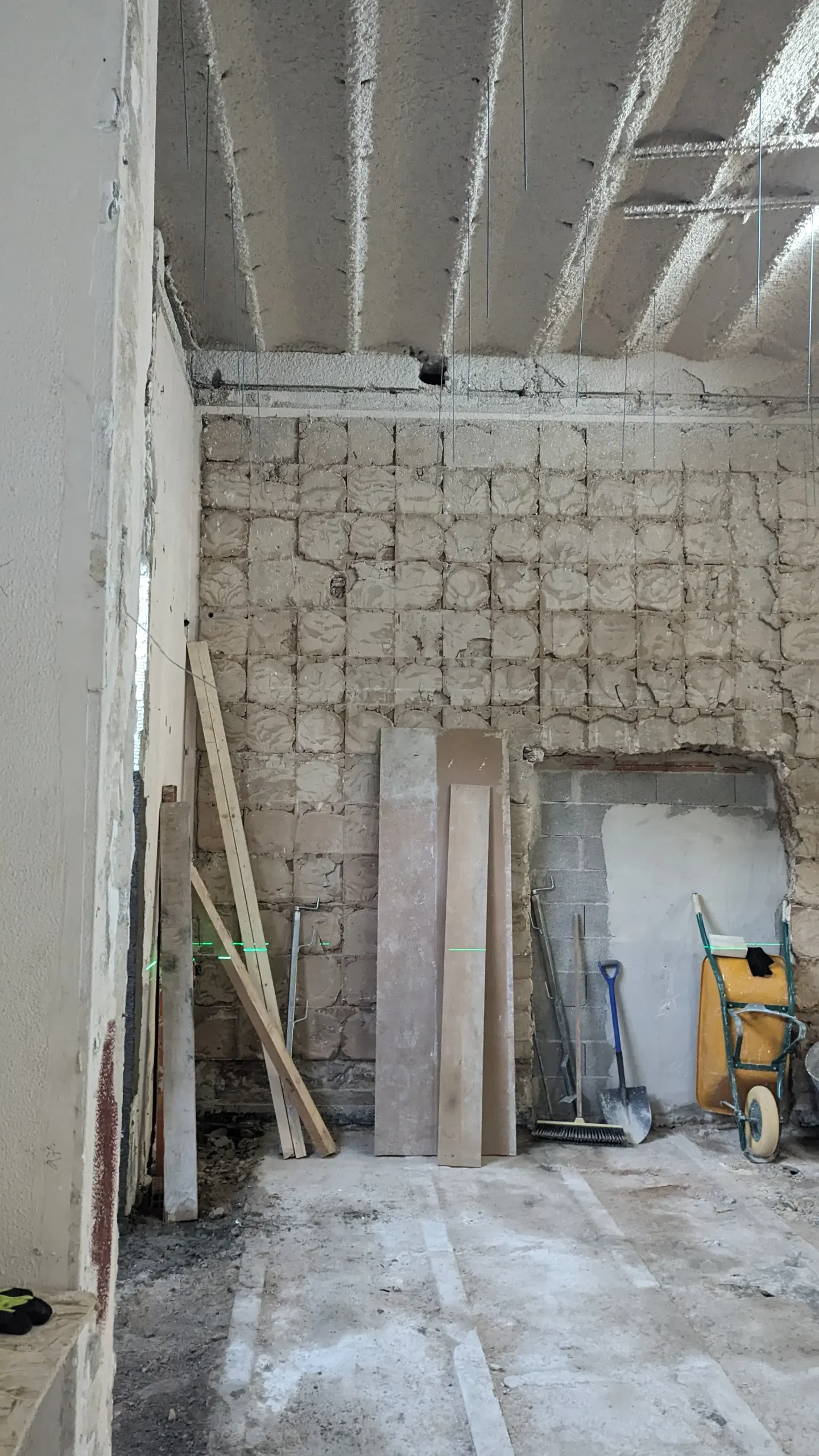
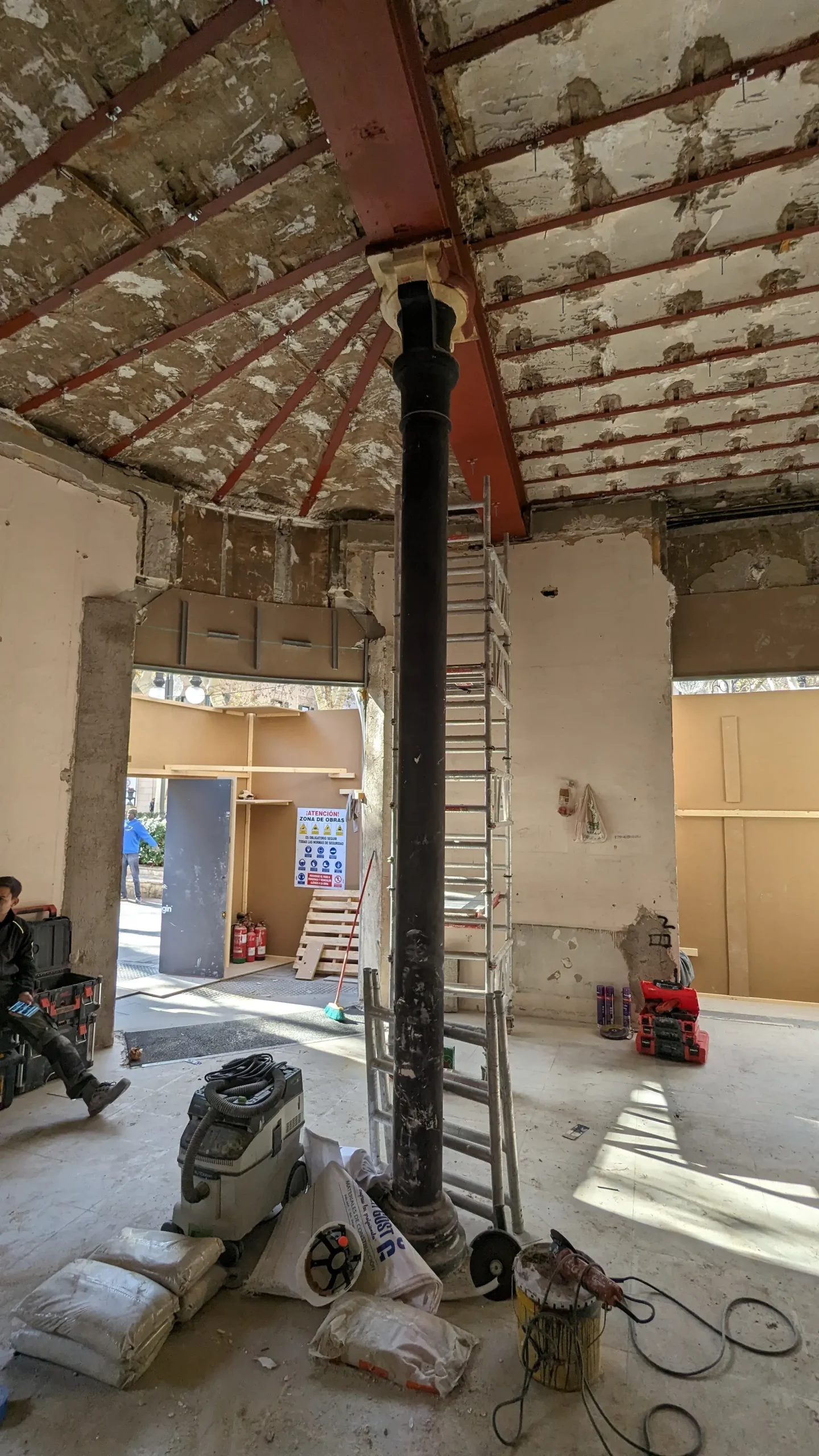
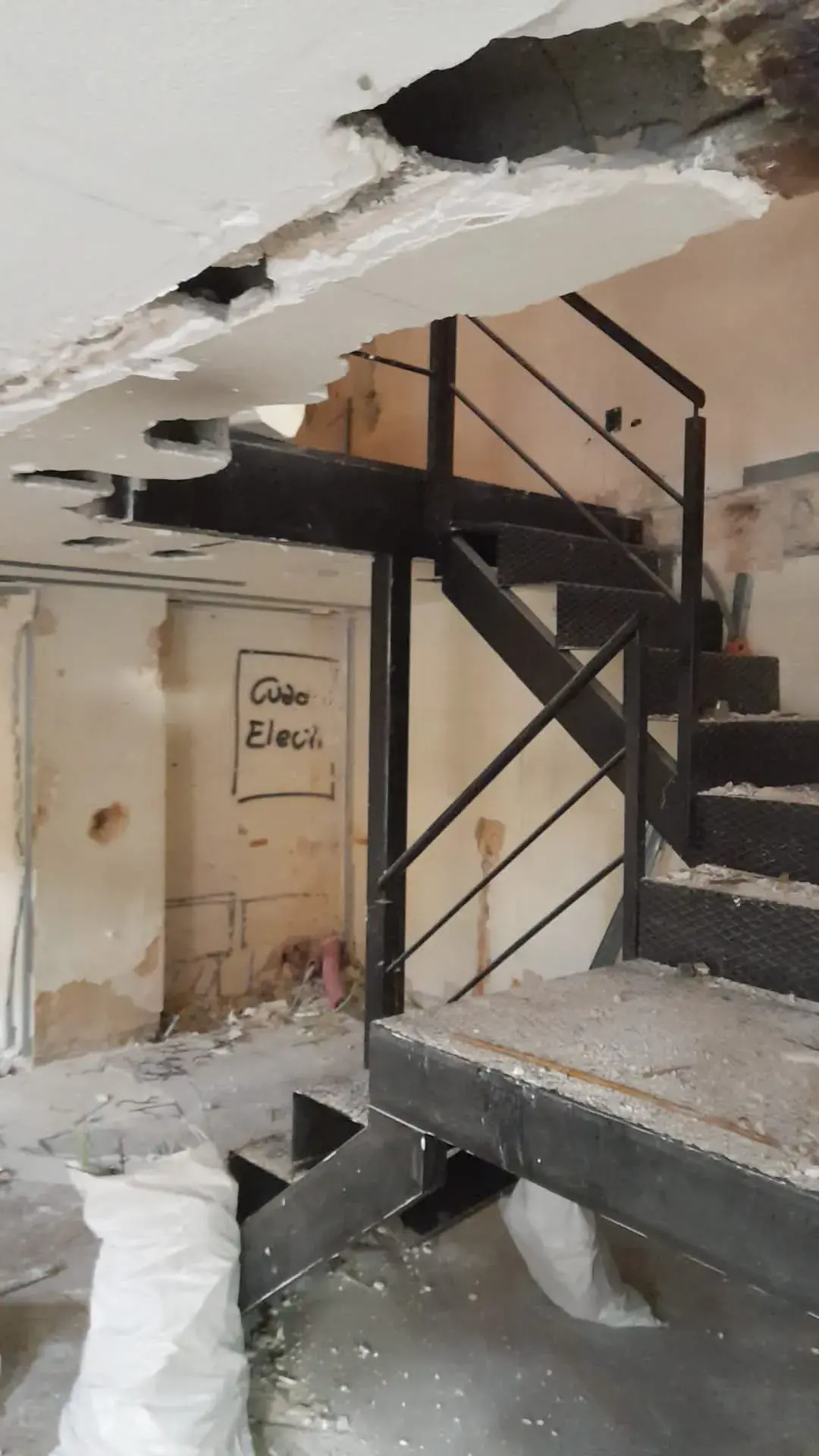
Construction site1/8

Relojería Alemana Born 6

Palma de Mallorca

Relojería Alemana Born 6

Palma de Mallorca